Artificial intelligence is presently changing the ways gardeners find information, plan gardens and approach everyday work. In this personal reflection, I explore what AI could mean for horticulture – and why human knowledge, experience and communication still matter.
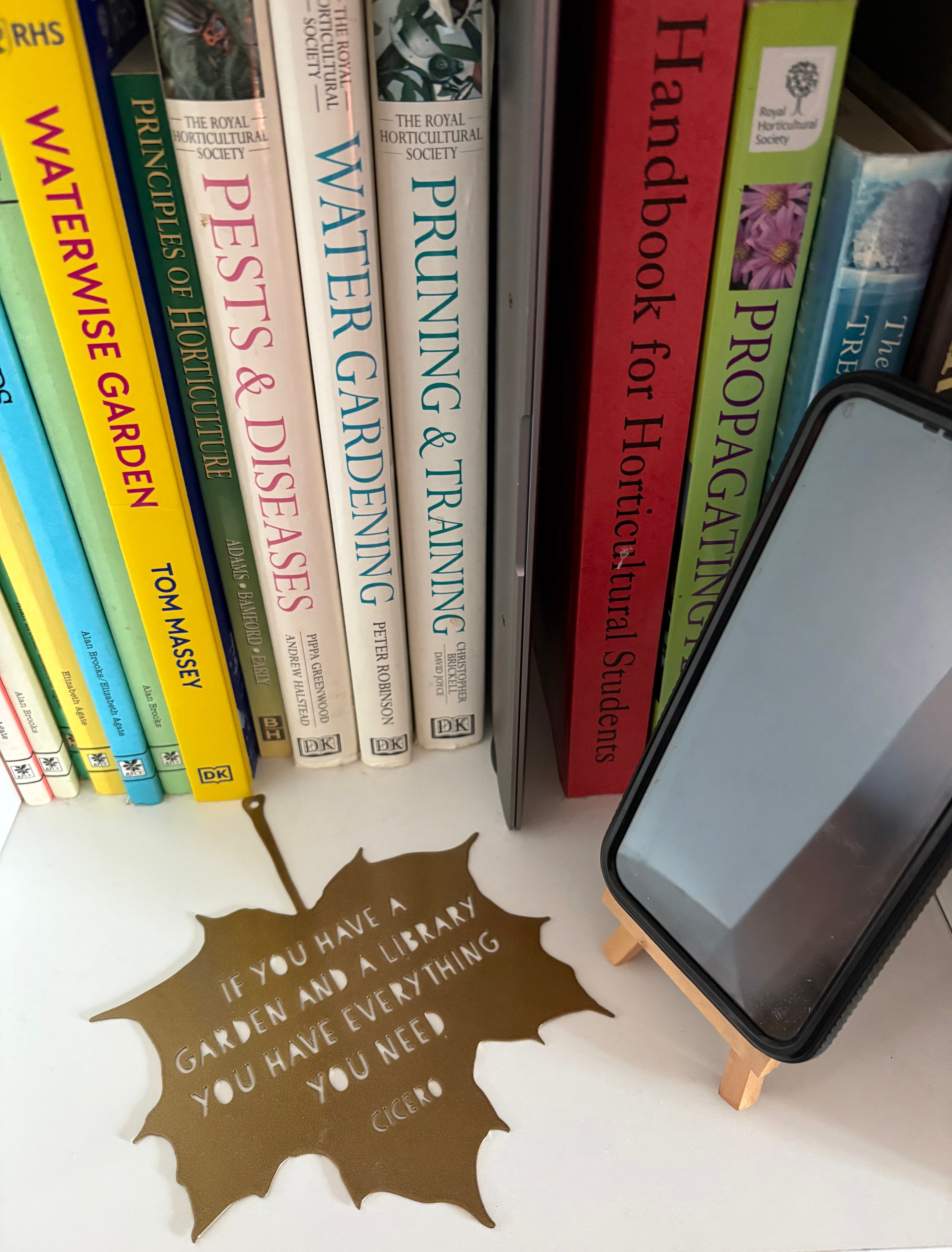
Like many folks I have always taken pride in being open to change, and through my horticultural career have frequently needed to alter my course and adapt to new working situations and technologies. Indeed, I could say that I’ve become accustomed to most tools of my trade from loppers and leaf blowers to laptops and laser pointers. However, something that once appeared as just another tool is now beginning to concern me, and that is the use of artificial intelligence (AI) in horticulture.
Before I dig into AI, it’s important to establish that down the years, whilst access to education and information is central, of prime importance is the influence of people, real folks who bring knowledge, lived experience and wisdom to each and every situation. Whilst we know that people can’t be right all the time, I’d be short-sighted not to recognise and value the people who guided me so well, and whilst I can’t fairly list them all here, they do stand side by side in my hall of fame.
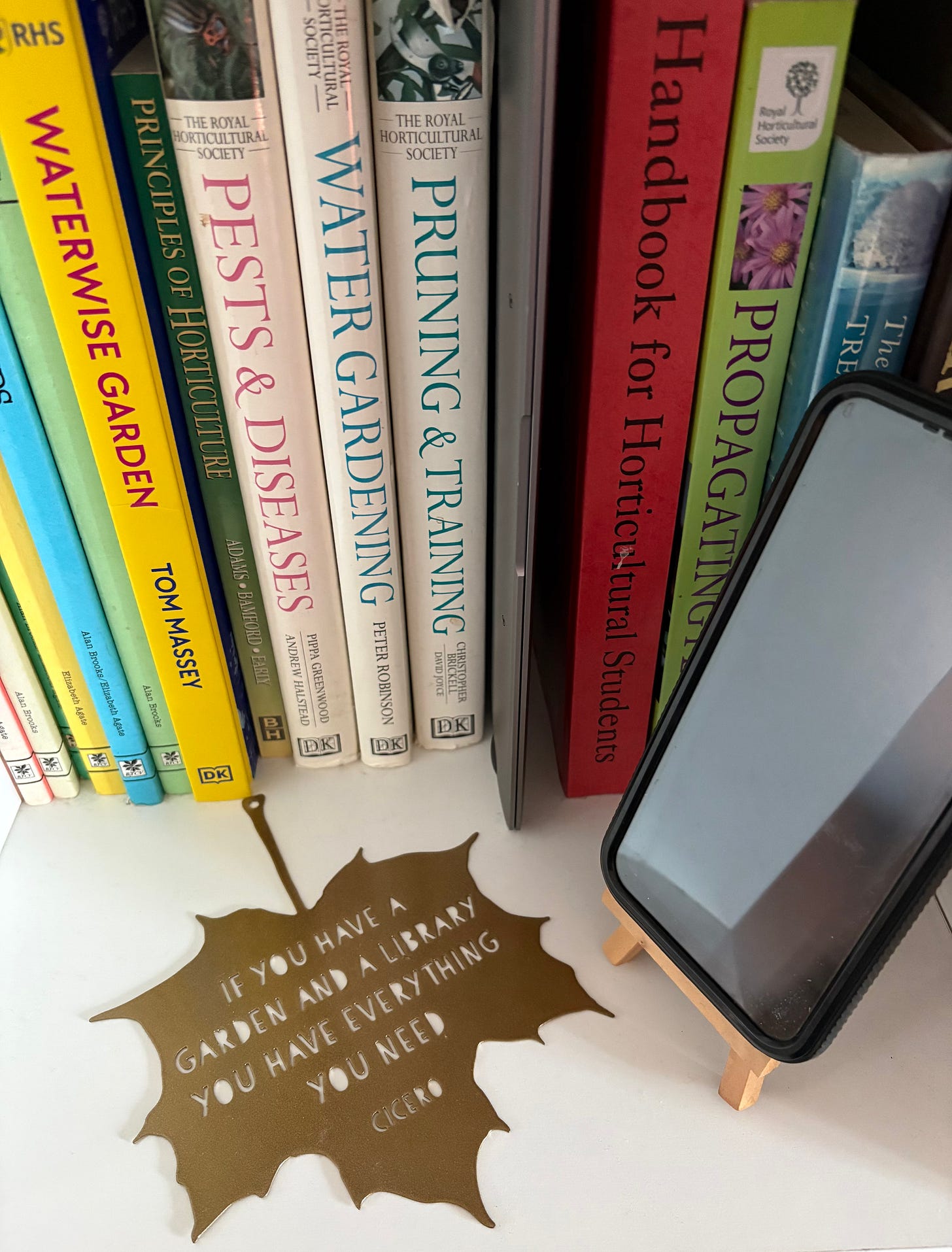
Along my gardening ways though and for the delivery of my work, I’ve often needed to research things myself, seeking answers that in the main would have seen me reach for books from a nearby shelf. These days however, with the pressure of needing answers in-the-moment and whilst many of my dog-eared books gather dust on the shelf, I find that I’m more likely to reach for my phone and search for answers on a browser than to flick through a book.
Most gardeners it has to be said would shudder if called an expert, and aside from some stellar individuals, most certainly don’t retain deep wells of knowledge on which to draw in any given moment. To be able to source answers to questions therefore is part of the broad process that is gardening, be that from our own font of knowledge, through books, people, or dare I say, through the internet itself.
That said, the route to information thanks to the devices in our pockets has become established as the new go to, offering a world of knowledge and influence on tap. The world wide web has become something almost all have needed to embrace at some stage, and its use as we all know is embraced in educational settings. Gradually though, I’ve noticed that where previously I would have sought guidance from a good book, discussed a gardening challenge with my colleagues or searched online to find the top answers, these days the latter is most often delivered using AI.
But therein lies the issue, in as much that to ‘Google it’, whilst cutting short those traditional research practices I mentioned before, does also remove elements of the process that helps facts to sink in. To ‘Google it’ takes out, in most circumstances, any connection with a real person, thing or process, and more so now that Google comes incorporated with AI. Most will remember that prior to AI being used in a web-based search, a list of links to information sources would appear, which at least demanded a modicum of further research and source document reading; that is not always the case any more.
In not having information provided by people, though, or found through self-guided learning from trusted publications, it could be said that we’ve actually weakened our professional positions, or that we’ve harmed the process through which we learn; and I say that appreciating that not all people are comfortable in traditional learning environments. I also realise that times change and things progress, and that we need to adapt, but learning can be particular to an individual, so yes – books for some are a complete turn off.
Yet here’s the thing, all of that process, those people and the gardening world we know and care for is I feel at risk of racing away from us on an AI powered machine. On a day-to-day basis we might presently be carrying on much as we always have, but on the quiet, AI is infiltrating every corner of every livelihood, and we must not be blinkered. It doesn’t feel like we are being attacked, more like the solid oak framework upon which many of us have built a working life is slowly being taken apart and synthetically reassembled before our eyes without consent.
I am of course referring to that treasured thing that offers itself, for an undisclosed fee, as the virtual colleague with all the answers to all our questions. It’s an app (there are a few) that entertains and enthrals, allowing us to time travel, to monetise our existence and manipulate our virtual and real time presence. It’s that search box system that has slid effortlessly into our lives with a faceless supervisory air that in no short measure is going to reduce the value of human communication, research and learning.
To be clear, I’m no technophobe, and for many years have eagerly sought to keep pace with technology that can move the industry and myself forwards. I didn’t laugh at those early robotic lawn mowers, for example, although some who did now must watch goggle-eyed at the industrialised monsters that operate today. Neither did I baulk when battery powered machinery made its way into the tool shed with the intention of eradicating their air polluting forebears; after all, I’d spent far too many years with my nose just a few inches from obnoxious two-stroke exhausts.
Well over a year ago I’d say, I was readying myself for this new AI phenomenon, something that might just make our lives that little bit easier. Indeed, there was and remains much positive spin on how AI could answer some of the world’s challenges, and that alone brings hope. What I couldn’t foresee, however, was how quickly AI would spread, nor to what degree it would weave itself to my living world. Naively, I thought that embracing AI would simply be akin to levelling up our favourite search engines.
Now, like many others, and by way of AI searches and questioning, I admit to having dipped my toe in the murky waters, and in all fairness have been pleasantly surprised as to the power of AI and its potential uses. If you’ve tried an AI powered search engine lately, then you’ll know it has definitely levelled up the output on what search engines delivered previously.
Given an accepted degree of usefulness then, the use of AI is sure to grow, with the potential not only to answer questions, but to generate products too, which is where I have to draw my line. You, for whatever reason can draw your line where you choose, but in seeing the potential that AI holds as a tool for trade, I feel that as horticulturalists we could be on stony ground.
By way of an example, here’s one that illustrates how AI crossed my path, and might influence yours:
A client, be they a self-confessed amateur presented me with a winter walled garden cropping plan, produced with an AI app. Now in some ways I’m programmed to applaud their ingenuity as an early adopter of technology, and yes the plan, though simple appeared fairly sound, even it if did miss out on such details like geographical location, orientation, soil composition and micro-climates. The arrival of said plan however did signal to me a significant shift in how working tasks and relationships could be influenced going forward.
No longer will a gardener’s knowledge built over a lifetime of learning and discovery, be automatically respected, or their ability to spend time creating, after self-guided research a plan for this or that. The shift that concerns me here, and one to be mindful of, is how the transfer of knowledge will now move from the qualified professional in the workplace to a remote ‘expert’ source online; a source that won’t just support our work but will plan every last detail for anyone able to type search terms.
It may already have been the case for some employers and for some time, but in due course there will no longer be an automatic need to ask a gardener, when AI, that will only improve, will discuss and demonstrate every aspect of every possible task. Everything from border or whole garden design to cyclical maintenance planning, it can all now be sourced by anyone at any moment.
Just think on that for a while, and I don’t just mean in gardening situations, but in everyday professional situations, where time-served educated and trained individuals are actively employed. Every decision, action and process will increasingly be called into question by a complete amateur who is happy to use AI. Imagine turning up for a day’s work to be given an online generated list of work tasks to attend to.
In less than the time it takes to put the kettle on, the head-sourced responses from people like you and me will increasingly be called into question – until such point that we’re reduced to programmable puppets that just need a willingness to follow a process. For now, we may take solace in knowing that practising gardeners remain employable to attend to the physical tasks, at least until robots can do it on our behalf; but it’s worth remembering that real people once mowed all formal lawns, whereas ever-improving robot mowers often now rule the roost.
Now, it would be easy to cast these words here to the side, and to continue on your own journey of discovery knowing full well that AI is here to stay, and that is your prerogative. Personally, though, I feel so concerned as to the long-term impacts of AI on our industry, that I felt drawn to voice my concerns.
What is for sure, is that given the reported benefits of AI, its environmental impacts and security risks, it IS here to stay, and as a product it is already being widely embraced. Wherever each of us choose to draw our line therefore, there are others who are freely adopting it without concern, and with a total disregard to its impacts on people; whether to save time or money, for their own benefit, or simply to shortcut the route to information and to be more informed.
As a professional gardener, one open to continual learning and development, I do have a genuine concern for where AI is leading us. AI does have its place, and for sure its use offers real progress, but surely it will come at a cost, and I have real concerns as to how its impact, which is fuelled by questionable motives, will impact the people it is rumoured to help.
My toolbox isn’t equipped with an AI stop button unfortunately, and I know that we all will somehow have to keep pace with this careering new world system, but if these words count for anything, at least let them forewarn you of how quickly AI’s adoption might impact our industry. Today, it might simply be a phrase like “I’ll pop it into ChatGPT to see what it suggests”, but tomorrow it could be “we ran the challenge through ChatGPT and here’s exactly what we want from you today”.
The words of John Wooden come to mind, in that “if we fail to adapt, we fail to move forward”, and for sure, under the banner of efficiency I will always be an advocate for education and engagement. However, whilst each of us cannot expect to know it all, and as gardeners we may dance around the houses whilst searching for an answer to an on-the-spot question, it’s important that going forward we’re aware that length of service, knowledge and experience may indeed become undermined; or exchanged for a willingness to learn which is cheaper by the hour.
In other words, we must be clear as we step through the AI arch as to where it might be taking us.
Do you share my concerns or have an experience you’d like to share? Let me know in the comments.