A Small Encounter – When a journey through an old orchard becomes a quiet lesson in how communities thrive.
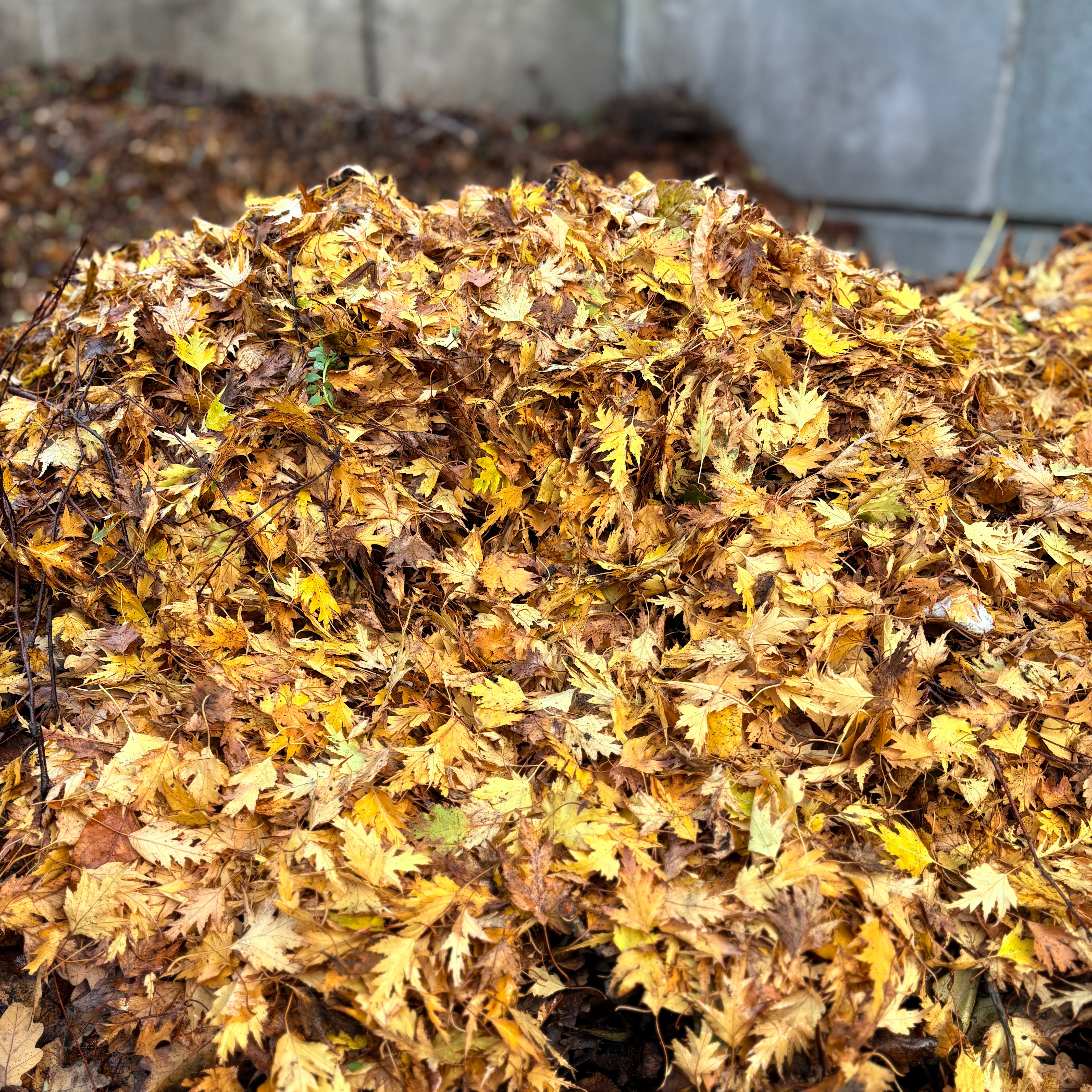
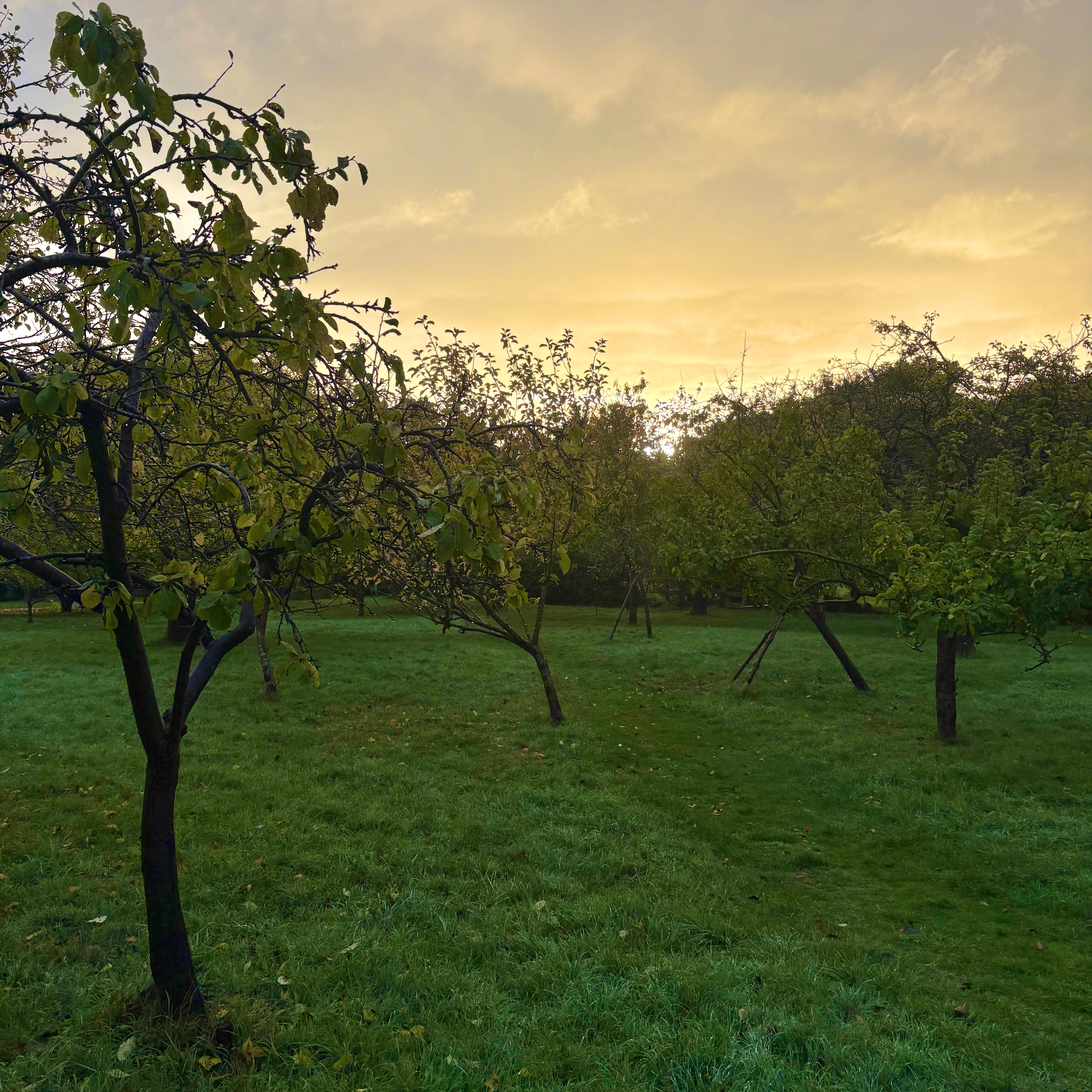
Recently I had cause to make several wheelbarrow trips through an old orchard carrying saturated sacks of golden autumn leaves. Gnarled heritage fruit trees populated the orchard, branching out from various heights with crowns spread wide to catch the sun. Below ground their roots were sure to have matted the orchard wide. In contrast to the underground tangled web, however, and thanks to years of practical pruning, the treetops kept very much to their own personal spaces.
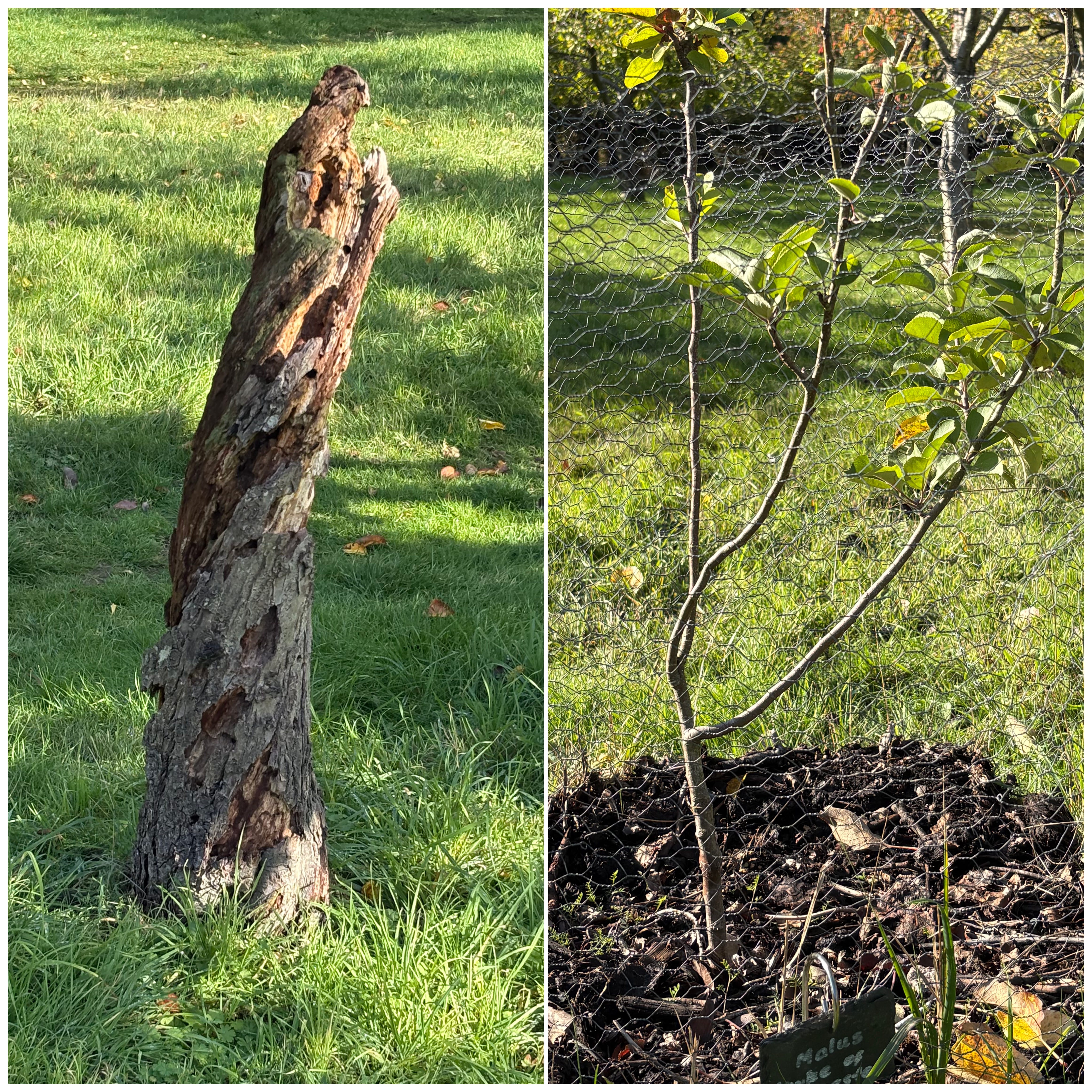
Each trip slowed as my arms grew weary, and breaktime promised a soft seat, steaming mug of coffee and a nibble of something sweet, until then I trudged on with stretched arms wheeling my way between the trees. After a while though I began to appreciate more than just the trees themselves, I started to notice the spaces in between. In a handful of open places whippy saplings were establishing, whilst in others, stumpy ghost tree relics remained.
As the morning passed, I mused on both the orchard’s timeline and its woody characters as if they were a community of people. I saw twiggy saplings as infants, nurtured by their elders for the potential they held for a fruitful future. As for the adult trees, their role was to feed and nourish the young and protect them by way of the microclimate they created. In the fullness of time all the trees, after putting down their roots just like people, would live to become stronger together, than if living on their own.
What I also wrestled with during each orchard pass was the idea that the hollows that existed within the orchard, whilst long-term pauses in fruit production, were just as important to the orchard community as the mature trees standing tall. In this I mean that each orchard gap, especially when occupied by an old stump or piece of standing dead wood, made a valuable contribution towards the orchard’s ecosystem and its continued survival.
Trees in the majority were clearly growing strong and true, and where little ones had been planted, the orchard’s future had been reasonably secured by its keepers. But where stumps and standing deadwood trunks had been retained, I saw that those spaces were not in the least bit wasted, they were transitory features that positively impacted the orchard’s flora, and fauna.
For sure, the orchard’s origin was initiated by hand decades ago and the input of people was everywhere to see, but as the orchard matured, the loss of a specimen here and there was not in itself a bad thing. Admittedly there would have been a host of reasons why any particular tree might have perished, but it could be argued that the orchard was simply implementing its own succession plan. In short, the orchard’s characters, just as if they were humans, or trees living alone in the wilderness, were evolving into a community of mixed age specimens, thus strengthening the long-term viability of the orchard and insuring its future.
Naturally, we do not need to move through an orchard to experience that which I mention above, for it exists all around us in our gardens and nature. Seedlings can be seen making their way into the world in the most unusual places. Juvenile plants twist for the light and scramble past older specimens, and fading veterans seemingly past their best, live and die to nourish the whole.
When you’re next out and about, look closely at plants living in communities and compare those that thrive and grow strong to those that do not. See plants old and young for the position they hold in their community’s timeline, and look to see the mutual support they offer each other.
Might I suggest a well-known phrase to recite when you’re next standing in front of a plant community: “All for one and one for all”.
Let me know what you see.

