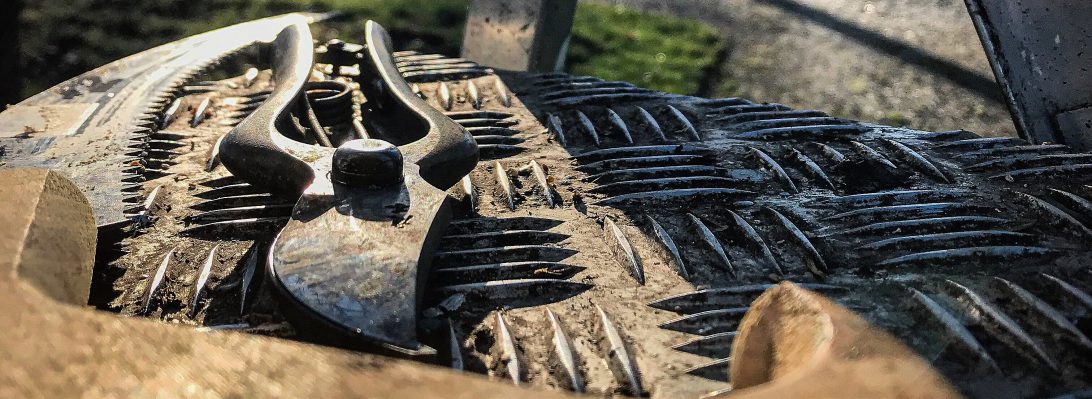
Garden Journal No.17 – Winter Vibes

In this autumnal garden journal I endeavour to embrace these cooler days, savour every natural detail and look to the trees for all they offer.

1. Garden Reflection

Tree Shadows and Silhouettes

Thrilled by the seasonal shift we’re experiencing, or grieving the loss of autumn’s warmth?

The weather turned much cooler earlier this week and whilst Christmas lights are fixed in place around the world, the last autumnal leaves are showing their colours whilst tumbling down. As wonderful as the colour is, however, I can’t help myself from being drawn to what is left behind, the shadows and silhouettes.

Black silhouetted branches of a large tree against a blue sky at dusk, with a building and a lit circular window below.
Shadows and Silhouettes

Deciduous trees might be looking forward to their winter holidays and not a moment too soon given the tough year they’ve had, but the situation may not be all that it seems, at least not for some. Exposed individuals and evergreen trees aren’t guaranteed a free pass from winter’s bitter winds that are sure to blow in again to shake and shiver their timbers.

Neither can trees in public areas easily rest assured, for many live near to streetlights which can artificially elongate a tree’s growing season. Just look for the clusters of leaves that remain on a tree close to a light source.

Other trees suffering sleep deprivation can be found near shops up and down the land, their branches electrified by festive fairy lights wiring them to the grid. I can’t help but love the twinkling trees, but I do hope they don’t mind.

By the cold light at dusk however and as the sun falls from the sky, I’m always struck by the limitless beauty of leafless trees; coal black veins reaching high into the sky whilst eery shadows envelope the earth. I hope never escape the twiggy embrace of silhouetted trees which are utterly exquisite from top to toe.

Tree shadows and silhouettes – what’s not to love?!

2. Garden Moments

Hot Toddies and Hand Warmers

It doesn’t seem so long ago when sun hats, cool drinks and fans were high on every gardener’s list before heading out to work. Today though as the seasonal wheel turns it is woolly hats, hot toddies and hand warmers.

Whatever the weather throws at us however it is with positivity, optimism and hope that most gardeners tackle every day. I say that because whilst gardening days can be tough, each one is nature filled and unique, and likely to send something special to capture the imagination and feed the soul; at least if we’re sure to notice.
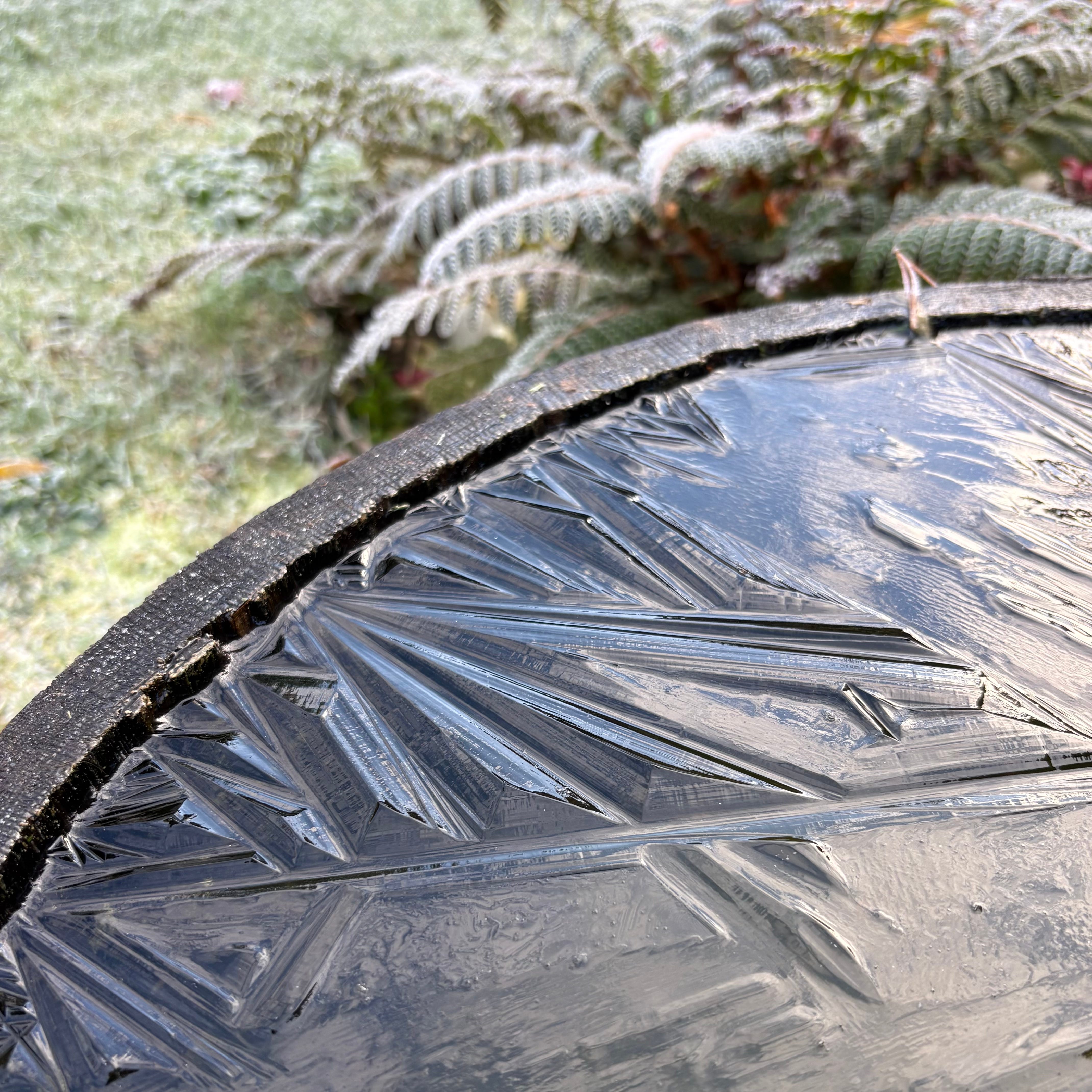
Angular ice on the surface of a still water feature, with frosted fern and lawn beyond.
Nope, I don’t know why it froze like this either, but isn’t it pretty?!

Naturally I count myself fortunate to work amongst plants and gardens, and to witness so many wonderful things each day, even when working in sub-zero temps. The reality though is that working as a gardener demands focus, if not to make sure I don’t step on something rare, but to ensure I don’t cut myself with one razor sharp tool or another.

Occasionally though on all but the busiest of days, I have to remind myself to pause and savour some moments, and occasionally to whip out my phone and capture a memory. The important thing, however you choose to spend your days, is to be ready to notice the special moments: a leaf stuck to someone’s shoe, rain bouncing on the road during a downpour, or a blackbird fleeing from a hedge; they’re all unique and can speak to you.

If nature presents a moment to you, however slight it may be, connect with it for all it’s worth and savour it, for each one can enrich your day if you let it.

3. Garden Aside

Leave It

The fact that I love my trees should go without saying, but an assumption that some people make when they see leaf collecting in autumn is that the task is an annoying one, it is not. In fact, it is extremely beneficial, not least for the wonderful leaf mould that composted leaves create.

Leaf clearing is carried out for many reasons, so many that I dare not dig deeper in this instance. The process of leaf clearing however, despite its physical strain can be quite meditative, and is hugely satisfying when a previously ‘untidy’ space is returned to its best self. If there is an irritation, it’s those gas guzzling leaf blowers, whose use is best kept to a minimum.
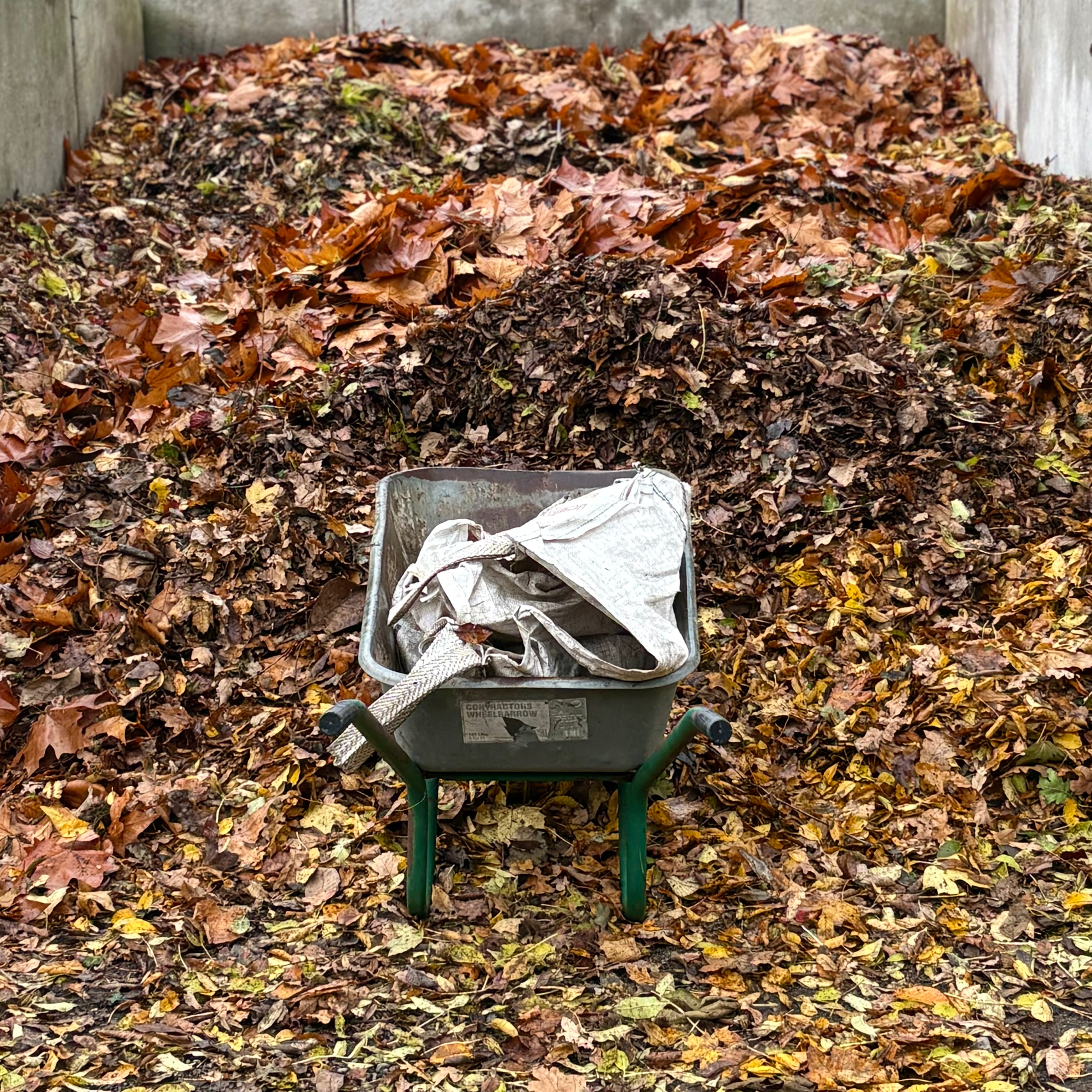
Autumn leaves collected and stored in a large leaf pile with a wheelbarrow and sack freshly emptied in the foreground.
Very few leaves ever go to waste in a gardener’s garden.

For sure, clearing away autumn leaves is at the bottom of many a gardener’s autumn task list, but it’s right near the top of my mine. Indeed, I see nothing but beauty and benefit in the operation, and whilst my raking shoulders will not, my heart will be sad when autumn’s last leaf drops onto the leaf stack.

How do you prefer to tackle your leaf clearing – little by little, or leave them until they’re all down then go large on the clear up?

Best wishes, GW.
Wheeling Between the Trees

A Small Encounter – When a journey through an old orchard becomes a quiet lesson in how communities thrive.

Recently I had cause to make several wheelbarrow trips through an old orchard carrying saturated sacks of golden autumn leaves. Gnarled heritage fruit trees populated the orchard, branching out from various heights with crowns spread wide to catch the sun. Below ground their roots were sure to have matted the orchard wide. In contrast to the underground tangled web, however, and thanks to years of practical pruning, the treetops kept very much to their own personal spaces.

Each trip slowed as my arms grew weary, and breaktime promised a soft seat, steaming mug of coffee and a nibble of something sweet, until then I trudged on with stretched arms wheeling my way between the trees. After a while though I began to appreciate more than just the trees themselves, I started to notice the spaces in between. In a handful of open places whippy saplings were establishing, whilst in others, stumpy ghost tree relics remained.

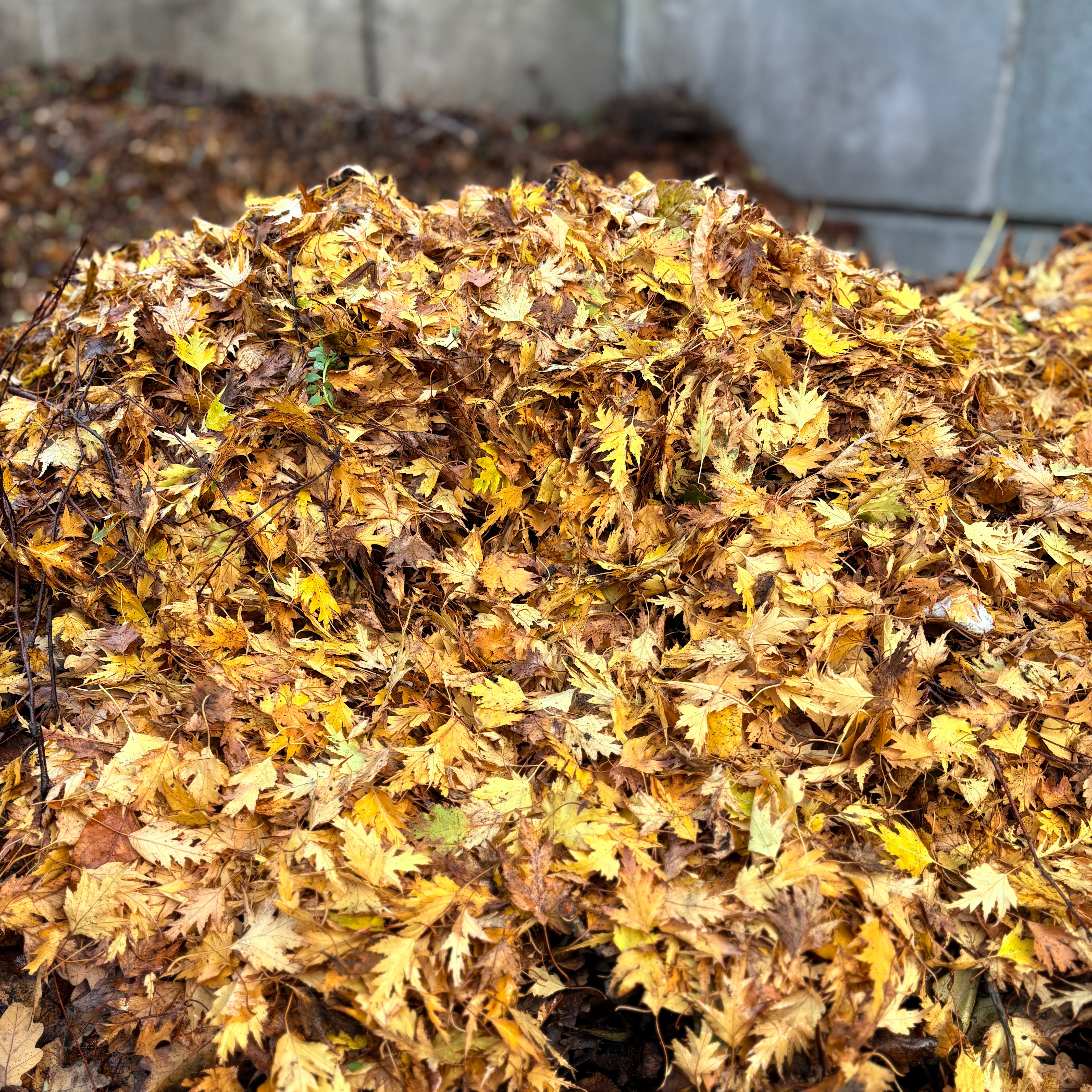
Golden leaves freshly harvested and piled in a leaf stack
The simplest of tasks can be the most informative.

As the morning passed, I mused on both the orchard’s timeline and its woody characters as if they were a community of people. I saw twiggy saplings as infants, nurtured by their elders for the potential they held for a fruitful future. As for the adult trees, their role was to feed and nourish the young and protect them by way of the microclimate they created. In the fullness of time all the trees, after putting down their roots just like people, would live to become stronger together, than if living on their own.

What I also wrestled with during each orchard pass was the idea that the hollows that existed within the orchard, whilst long-term pauses in fruit production, were just as important to the orchard community as the mature trees standing tall. In this I mean that each orchard gap, especially when occupied by an old stump or piece of standing dead wood, made a valuable contribution towards the orchard’s ecosystem and its continued survival.

Trees in the majority were clearly growing strong and true, and where little ones had been planted, the orchard’s future had been reasonably secured by its keepers. But where stumps and standing deadwood trunks had been retained, I saw that those spaces were not in the least bit wasted, they were transitory features that positively impacted the orchard’s flora, and fauna.

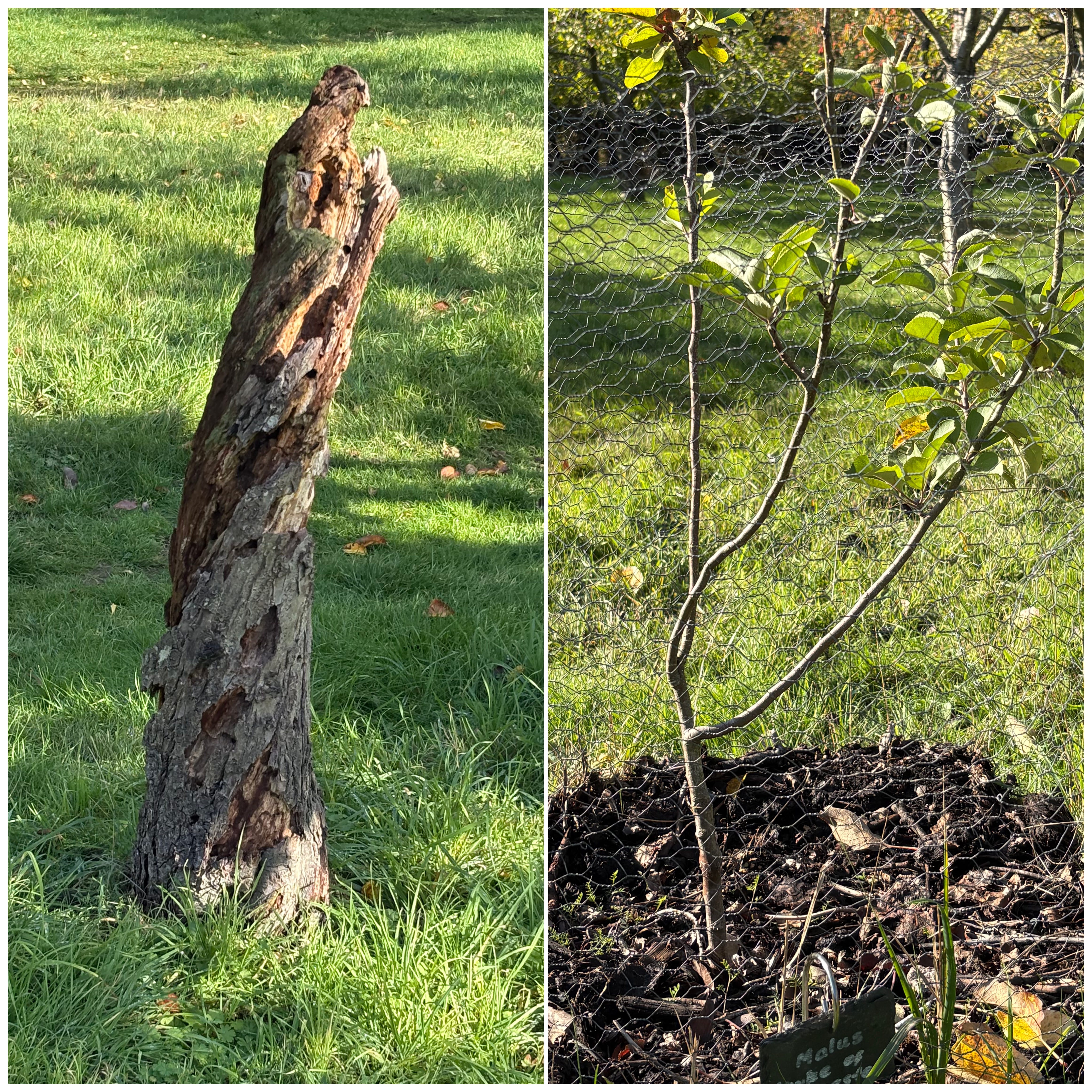
A dual image, one showing the remains of an apple tree, the other a young sapling behind a chicken wire safety net..
Standing deadwood and a young tree living in harmony.

For sure, the orchard’s origin was initiated by hand decades ago and the input of people was everywhere to see, but as the orchard matured, the loss of a specimen here and there was not in itself a bad thing. Admittedly there would have been a host of reasons why any particular tree might have perished, but it could be argued that the orchard was simply implementing its own succession plan. In short, the orchard’s characters, just as if they were humans, or trees living alone in the wilderness, were evolving into a community of mixed age specimens, thus strengthening the long-term viability of the orchard and insuring its future.

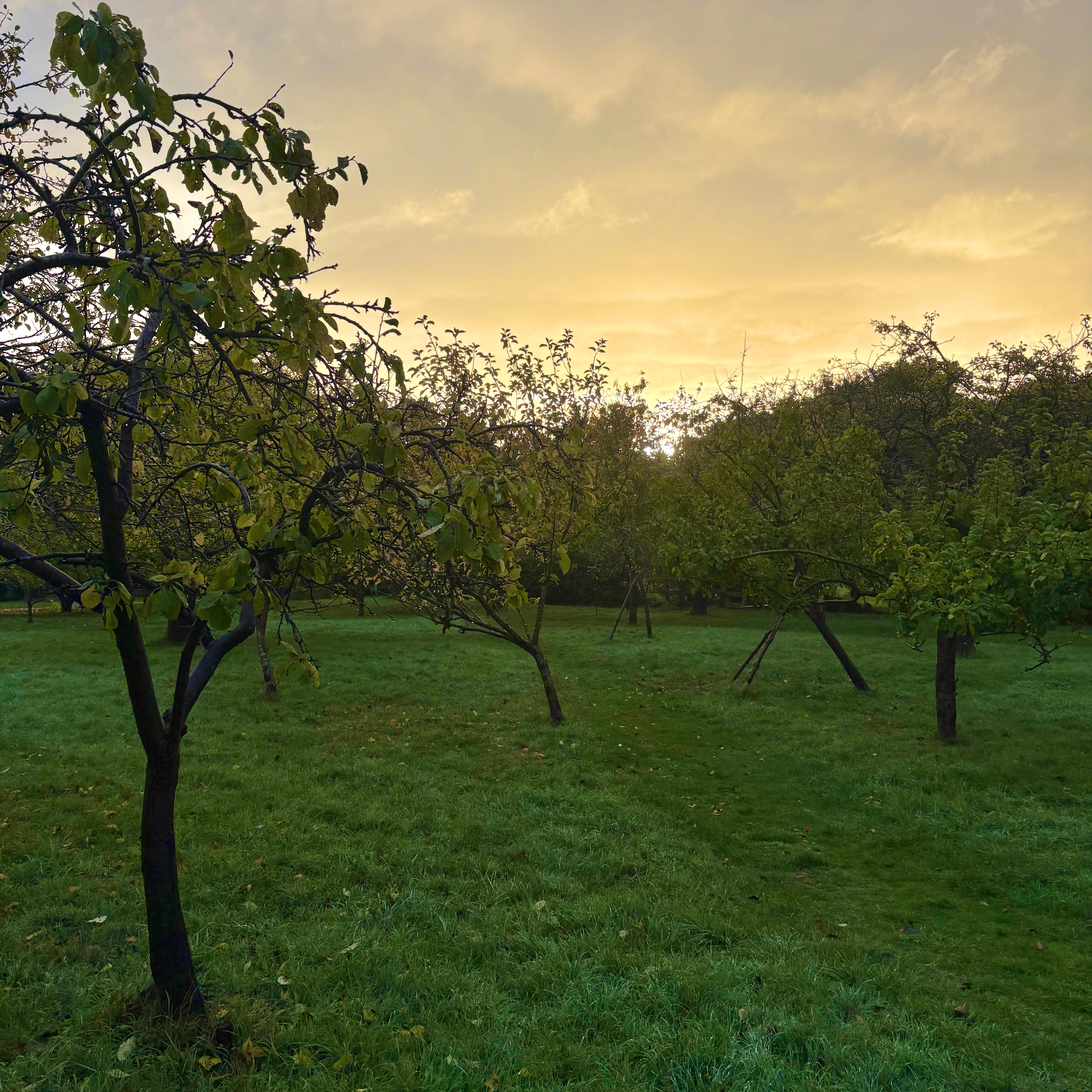
Subdued skylight through an orchard of apples trees amongst lush grass
Subdued light across the orchard community.

Naturally, we do not need to move through an orchard to experience that which I mention above, for it exists all around us in our gardens and nature. Seedlings can be seen making their way into the world in the most unusual places. Juvenile plants twist for the light and scramble past older specimens, and fading veterans seemingly past their best, live and die to nourish the whole.

When you’re next out and about, look closely at plants living in communities and compare those that thrive and grow strong to those that do not. See plants old and young for the position they hold in their community’s timeline, and look to see the mutual support they offer each other.

Might I suggest a well-known phrase to recite when you’re next standing in front of a plant community: “All for one and one for all”.

Let me know what you see.

Walks and Wild Words

Won’t you come and crunch some acorns with me? Fact, fiction and times past, all woven crudely together and unravelled here, in this short story search for purpose.

Early one autumn morn during a country walk, I happened across an impressive holly oak tree, where I chose to sit for a while. There, I was to discover not just a handsome tree but a potent place, one that offered a lens through which landscape and life could be viewed.

Prior to that deep-seated moment, I’d been drifting in and out of thought whilst stomping up a hill, upon which oaks and yews had lived for a century or more. Boughs from path side trees formed an impressive tunnel overhead, but my eyes were mostly flitting from fronds beside the path one moment, to fungi living on fallen wood the next: all the while crunching over acorns strewn all about, it being a mast year.

After a few minutes of continual climb, I was drawn by some light glowing from the side of the track, although given the seemingly never-ending weather pattern, it wasn’t so much a burst of sun, but a brief patch of brightness. Nevertheless, whilst standing there appreciating that burly oak’s silhouette, a narrow track appeared before me, so through the ferny foliage I duly stepped, unsure if I was simply exploring the place, or had been summoned to it.

Continue reading →

Tortured Tree – Planted but not forgotten

My discovery of an ill-fated tree on a wooded hillside, a tree striving to survive and play its part for our world – a reworked essay from Gardening Ways 2017.

Time travelling back to a tree planting day on a gentle hillside a century or so ago, I picture a fresh-faced country character with their sleeves rolled back and a bead of sweat beneath their flat cap, standing back to admire their work. They, like us now would have wanted only the best for this tree that I now stand before, especially after digging into this heavy ground that I know to be stone filled and stubborn.

As for any tree planter today, our character would have wished for this tree to establish well and prosper, feeling equally sorrowful and comforted knowing it would hopefully remain long after they themselves had breathed their last. Nodding to the future then, they’d have prayed for a mild season or two to ensure that its shoots would get away and its roots would establish well, binding the tree to that spot for generations to come.

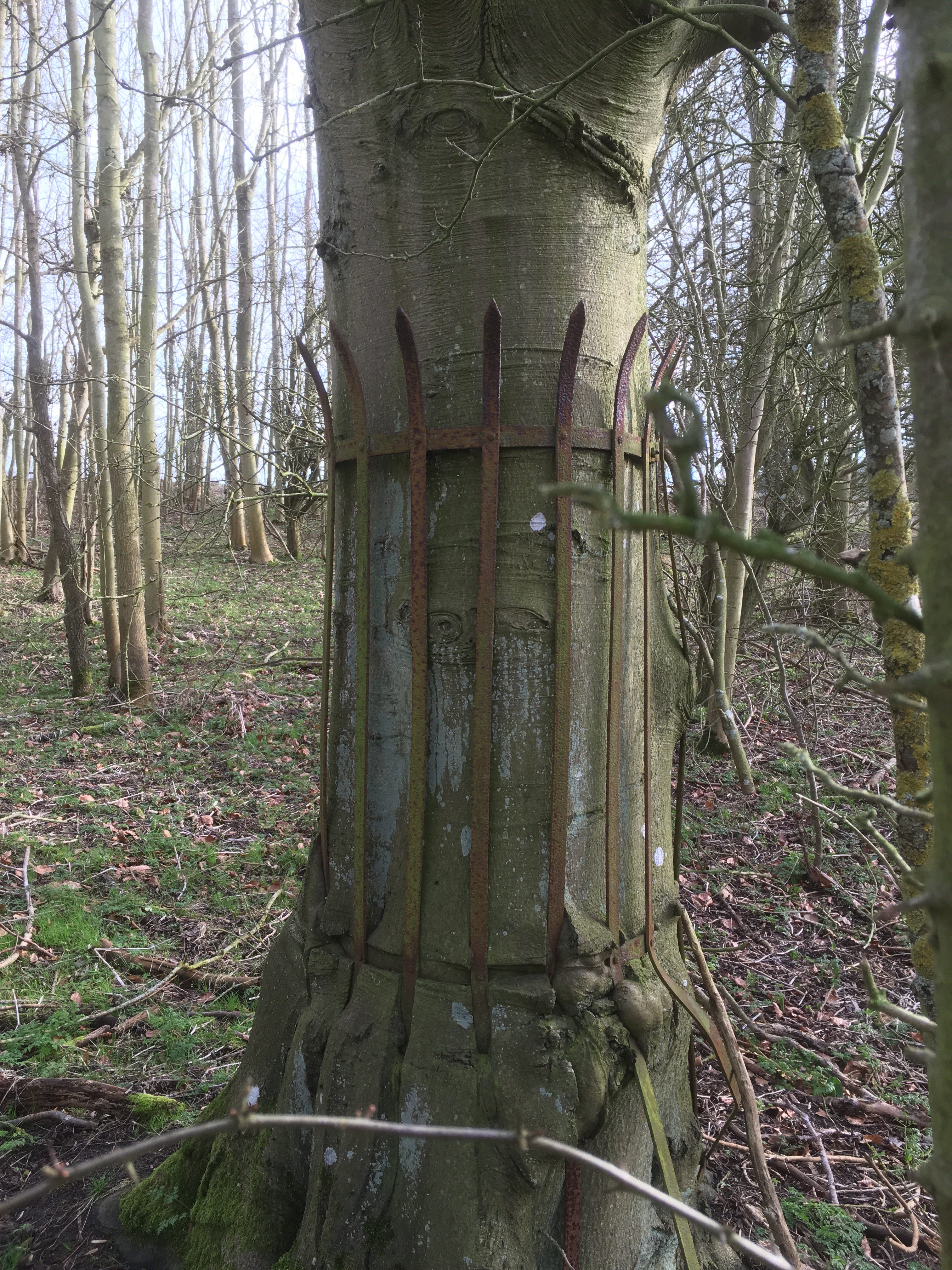
A beech tree encapsulated in a rusting tree guard that should have been removed long ago, set in a thin woodland.
Until you see it, I mean really see it, it’s just another tree in the woods. G.Webb.

After firming down clods of earth with the heel of a hobnail boot, the planter would likely have scooped water from the nearby lakeside to settle its roots, then fixed in place a strong protective frame to guard it against attack; a metal cage likely to have dwarfed the infant tree but certain to keep it from harm. Little did they know that despite the most caring of intentions, their actions condemned the tree to a torturous future.

Continue reading →

Garden Journal (No.2) Storms and Stars

I’m bouncing back again with edition two of my garden journal, one with serious woody notes to begin with, but looking up with joy and inspiration to the end.

Here I am back with a second garden journal entry, and I do hope to find you well. I’ll jump swiftly into my journal, but make no apologies for the heavy beginning, as I became increasingly bothered over the past week as you’ll see. I promise to try and end on a lighter note though, if I can.

Generally Speaking.

It’s been raining overnight in our neck of the woods and all around is once again squelchy and soft. The rain however, itself causing havoc and flood damage in many areas has been eclipsed yet again by the devastation caused by storm-force winds. (After that opener, you might see that it would feel a little shallow and ignorant if I were simply to write this week about how challenging it’s been to get out in my garden!)

Storm Éowyn last week, and back in December storm Darragh have each been responsible for widespread damage across the UK and beyond, including the shearing and felling of thousands upon thousands of mature trees across gardens, parks, estates and countryside. Whilst the impact across all areas was severe and challenging for people with actual loss of life, itself heart-wrenching, my professional focus at times like this soon turns to the people on the ground: those responsible for the enormous task of making areas safe and accessible.

Being centrally placed in England, and whilst not completely unscathed I feel fortunate to have escaped much of the storm driven destruction – more a case of luck over judgement, I think. Having worked with trees for so long though I’m naturally uncomfortable with it all, understanding as I do the hard physical effort and difficulties associated with clearing up after a storm, not to mention the emotional impact of losing special trees. Trees, being forceful structures that populate our day-to-day lives, can leave an awfully big hole when they’re taken by the will of a storm.

The loss of any tree can be hugely upsetting, especially if a particular tree holds significance: if it were planted by notable individual or to mark an historic occasion, for example. When the number of tree losses rise however, the impact and true cost can lift enormously, not just the cost of removal, repair and replacement, but the physical and emotional impact on our treasured spaces.

To conclude this section, and whilst trying hard here not to spiral into a detailed dialogue on the value of trees or shout into the void from my soap box, I do want to finish with some final words in support of those in far off places dealing with the impacts of said storms. 

The physical, emotional and financial cost of the cleanup will be substantial, and in each shaken location folks will be coming to terms with the impacts of a changing climate; I do hope those caught up in this are getting the help and support they need. 

As we move forward, I know that wise minds are learning from these extreme events, to help us better prepare for a future where we do stand a chance of weathering these storms more effectively: there will be a way and our beloved trees, with a little help, will win through. 

In the Garden

Stepping into the shallows after all, I’m glad to say that I did manage to find time between the showers to flex my green fingers, with my first new year session in the home garden.

The session wasn’t much to write home about, which does present a challenge as that’s exactly what I’m here to do – write about gardens! I did though tackle one ornamental border, cutting back all useless dead growth from last season to expose areas of soil in between shrubs and perennials. Once my mind was made to get stuck in, I very quickly found my stride, trimming, picking up fallen debris and generally tidying.

Leaving a couple of deciduous grasses alone, which I shall trim back a little nearer to spring, (I hope they’re packed with ladybirds so I’ll stay well clear for now,) my goal was to clear away just enough debris so that I could mulch across the surface with a nice insulating layer of organic peat-free material. Whilst the mulch itself is primarily intended to benefit the soil, it will suppress weeds and its visual impact is a treat, leaving a nice dark even surface that sets off the planting beautifully. More borders lie in wait for attention.

As far as the allotment is concerned, last weekend I secured a batch of seed potatoes, and have set these out in a cardboard tray in the shed window to chit, or develop their shoots. This year I’ve gone again for first earlies and maincrop varieties, the former ‘Casablanca’, the latter ‘Elland’, my search continuing for a spud that tastes especially good. I’ll have some space for at least one other variety, so if you’ve a recommendation for a good allrounder, I’m certainly open to suggestions.

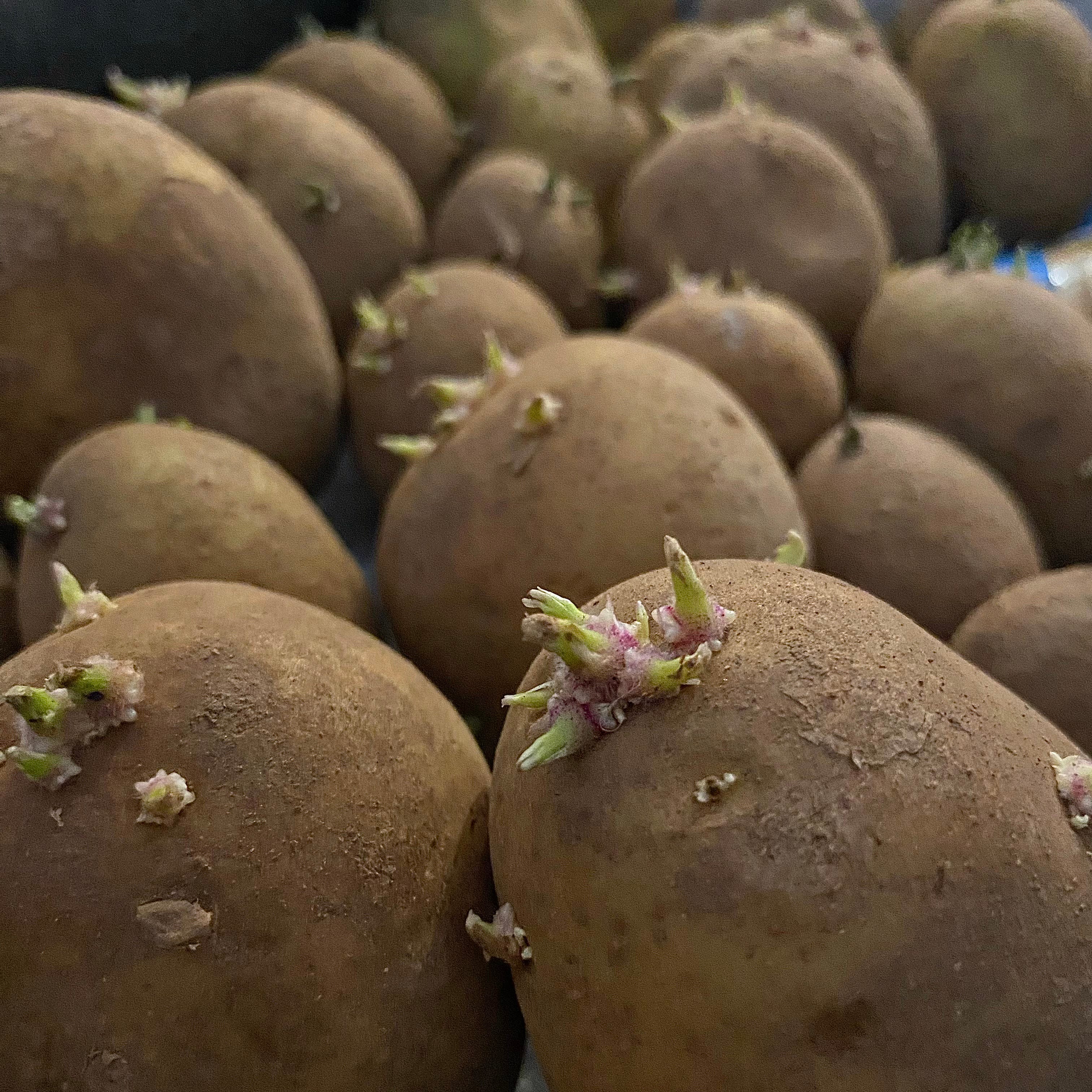
Seed potatoes chitting, layer out in a tray with their 'eyes' upwards to the light.
Seed potatoes chitting, new shoots for the new year.

Looking ahead.

As well as the spuds, last week I also acquired some more garlic bulbs and onion sets, which I’ve yet to deal with. I’ve some in the ground already that were planted last autumn, but many appear to have lost their shoots to birds, so growing these ones on in modular trays for a while is my plan. Mind you, if I wake up brave, I might plant them direct with some fleece over, we’ll see. (With no Monty right now to tell us what to do at the weekend, how are we to know?!) 

Last time I mentioned the purchase of a new bird box for the garden, which is now all decorated and awaiting installation – another job for the weekend. I’ll share its grand opening on Insta when I do finally fix it in place, the bird box artwork is a bit different to the norm and something of a collaboration – I shall say no more for now!

Finally, now that a new moon has come to pass and waxes towards February’s Snow Moon, I shall be continuing to take as many evening walks as I can, not only to stretch my legs but also to make the very most of the starry skies. They’ve always been there I know, but as the days rapidly draw out, I’m increasingly pulled to make the most of the dark skies while they’re here (at a decent time), and each day find myself looking forward to seeing what the night’s sky will hold. There have been some exquisite opportunities recently.

If you’re local to me and see me leaning on a lamp-post on a street corner, I won’t be waiting for a little lady to walk by, but will certainly be looking up and besotted with the star speckled sky! (If you’re of a certain age you’ll know what I mean!)

For now, I’ll wish you all the best, and will sign off my garden journal. Regards, Gary Webb. Gardening ways.

A Talking Tree

If you know me you’ll know of my fondness for trees, and even knowing they have turned on me from time to time, I’m unlikely to have anything negative to say about them. This week being National Tree Week then, is a time for me to reflect on the wonder of trees, to celebrate and be thankful for them, and if conditions permit: a time to plant one too. It would be remiss of me therefore not to put pen to paper and fingers to keys in order to show my respect for our woody friends. If you’re here though for the usual ‘love and plant trees’ kind of message, you might just be barking up the wrong tree.

Today I’m not so much going to write about trees, but write as one, and yes you did read that correctly: I’ll be morphing into an actual tree, to present an alternative tree’s-eye view. Should you choose to read on therefore, you’ll find it’s not so much me talking about trees, but talking as one, for a change. Go with it for a while, I dare you!

Now, to a point, I’d consider myself tree-like anyway, my robust trunk having grown incrementally over the years. When puzzled, my furrowed forehead isn’t too far removed from a tree’s fissured bark, and at times I can get a little creaky. Thankfully,

Continue reading →

Ginkgo Moments

The presence of trees in our world should never cease to astound. Take a look at this Ginkgo, for example, living its moments peacefully in a Herefordshire garden. Note: This article, previously posted autumn 2023 has been reworked for this autumn, renewed after meeting the tree again recently. I hope it triggers some tree-like exploration…

Standing beneath its mature crown looking up, it was hard not to be impressed by the tree’s volume and its many stems shooting out in different directions. Dare I say, the tree may not have been an artistically formed treasure like the trained fruit in the walled garden nearby, but it did hold a rugged charm. If however the tree lacked any refinement in its structural form, it more than made up for this in style, its many clustered leaves shining en masse with a fiery yellow intensity.

With confidence the tree spoke too, proving it wasn’t all about the frilly foliage display. A soft purposeful sound emanated from its crown, a tune that hushed with each southerly breath of wind. As this cool November breeze blew in from the park, I moved in closer,

Continue reading →

The Little Hawthorn Tree

Logic tells me its hard wood picked up none of my thoughts, but nonetheless I willed the little tree to feel something, not wanting it to stand there in silence anymore. In humanising this undeniably non-human being though, sending thoughts in lieu of an impossible conversation, I wanted the tree to feel noticed and appreciated, not just ignored as part the scenery.

I’ve stood before this somewhat ordinary tree many times, this time however, my attention was seized by a blood coloured berry, one of just a few left dotted around the tree’s tangled twiggy mass of branches. Where just a few weeks ago little red

Continue reading →

A First Forest Bathing Experience

Exactly what do people do when ‘forest bathing’ is a question I’d pondered for sometime, when intrigue recently got the better of me. I happened across Healing Earth Ways who were offering a session relatively nearby, another bonus being that participation supported Warwickshire Wildlife Trust; surely it was a win-win situation for all.

My first session began on a sun-blessed morning when frost covered shaded ground, beside a reservoir car park in rural Warwickshire where our welcoming guide stood patiently with a list of names, smiling reassuringly. Before us was an especially bright white stand of birch trees, and behind those a woodland belt which clearly concealed the place we’d soon to be heading.

Morning perfection, by Gary Webb

Beginning with an introduction to the nature of forest bathing, or Shinrin-yoku as it’s called in its origin homeland Japan, our guide softly explained what we’d let ourselves in for. Rather than

Continue reading →