Hello and welcome to the tenth edition of my new garden journal, a place where I pause time and take note of where my gardening world sits right now.
Firstly
Looking out from where I’m writing just now, except for a Dahlia burst of white and Japanese anemone flowers, my garden is full and alive with vibrant foliage. Despite cloudy skies this morning, light is captured by thousands of leaves all around, each colour intensified instantly by the merest hint of additional sun. Autumn is such a special time of year, and I’m repeatedly struck by its beauty.
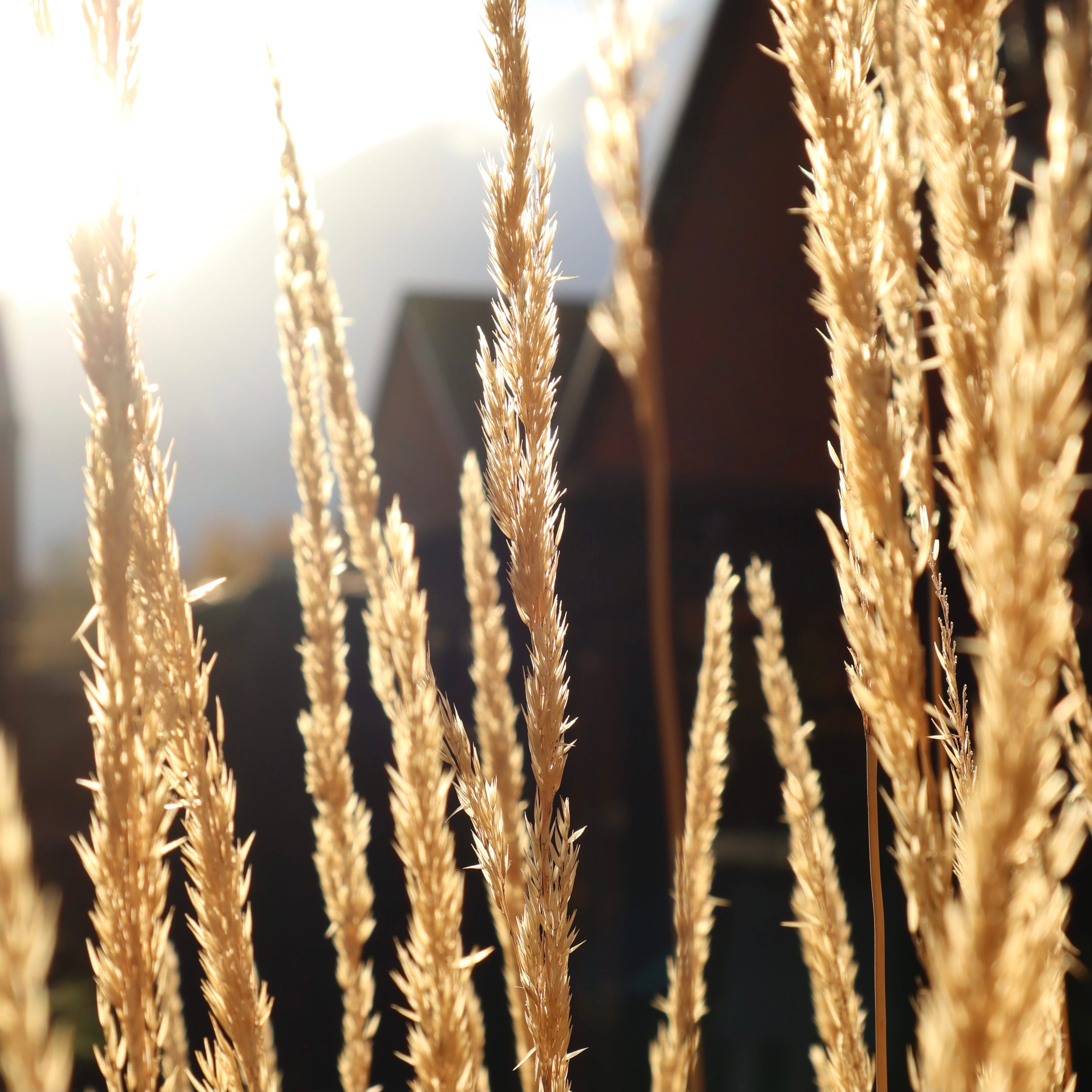
Zooming-in to my home plot, I can usually take the yellow leaves of dogwood either way, but right now they do contrast pleasantly with the rich green lawn; and I’m beginning to see the fiery stems revealed once again too. Whilst I grin knowingly at the birch whose leaves are again late to turn, nearby a hornbeam Niwaki is busy transforming itself into a striking gold and copper sculpture. If it were a competition though, the blonde Calamagrostis seed heads would certainly take first prize, being the showiest of all, bursting brightly upwards before the blackened fence; it’s all keeping me in absolute captivation.
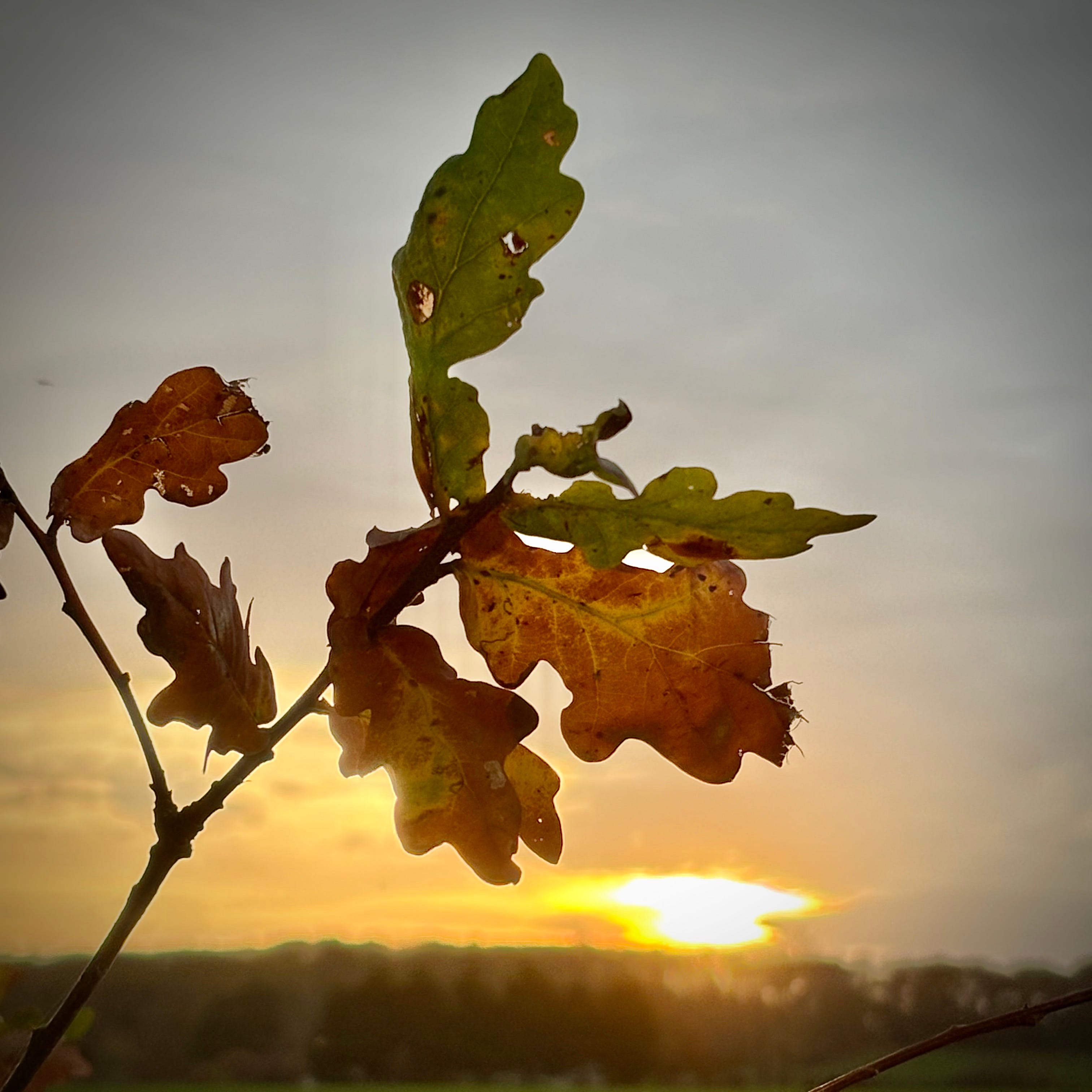
Despite the grand display though, I know that all the plants are doing is preparing for winter, their last throws of visible life colouring my days ahead of hibernation. It’s a little way off as yet, but tough winter days are ahead, maybe even frosts by the end of the month, so like us, these plants are simply pulling back their reserves; surely, we should be taking a leaf out of their book and applying it to ours?!
Regardless of the natural science however, what I’ve come to understand is that plants can offer much more than flowers and fruit, they can deliver across all months of the year – and many are especially satisfying right now in the midst of autumn. As such, despite so many other things bidding for my time each day, I can’t help but stop and stare at my constantly evolving garden scene, which if given the power of speech, would surely whisper “hey, it’s autumn out here, come and have a look at this!”
The bond we develop with plants can run very deep for sure. Therefore, whether it’s a single specimen in a balcony container, an allotment plot or an acre of ornamental woodland, honour and celebrate this time of change for all it is worth: every burning blade of grass, gleaming red berry or tumbling leaf. Cherish and absorb the autumnal all, and bask in its brilliance, for in just a few short weeks all will be done – at least until frost comes, when fresh new whispers will drift on the breeze.
On the work front…
After bidding farewell to a close colleague last month, two more have since sailed off into the sunset, and it’s fair to say that the water is still a bit choppy. Personally, whilst my lifeboat has taken on some water, I continue to move along with a firm grip on the oars, a life jacket that is strapped on securely, and with some great colleagues’ who row alongside me.
As the quote goes: “Everything will be okay in the end. If it’s not okay, then it’s not the end.”
Far be it from me to get into gory details, which wouldn’t be wise. All I will say for now is that significant change lies up ahead. For the foreseeable future I’ll be busy doing the usual but looking to next year, and I’m actively seeking a new opportunity where my horticultural, heritage and garden design skills can be put to good use. To put it another way, aside from anniversaries, seasonal thresholds and lunar events, my 2026 diary is very much a blank canvas!
In the Garden
At home…
If not just the time of year, or having more than a few things on my mind, it should be no surprise to hear that my home gardening ambitions have significantly slowed. That is not to say nothing is doing, I’ve just taken my foot off the gas pedal so to speak.
The key focus has been bulb planting, with two modest groups going into two separate areas within the borders: Narcissus canaliculatus and N. ‘W.P. Milner’. Whilst more would likely thrive in the lawn area, I’m not of a mind to plant in that space until the garden’s form has fully settled down, so until then planting in the border and in-between herbaceous plants is the way.
A couple of other additions include some Tulip clusiana, which are soon to go into a container. I’ve wanted to try these for years since reading about the botanical wonder Carolus Clusius in Anna Pavord’s ‘The Tulip’, which I’d heartily recommend. I can only hope then that my few bulbs in a pot rise to the memory!
Finally, I have some tiny Ranunculus tubers to pot up for use in the new year, and for some delicate early spring colour, I did pop a few Iris reticulata‘Clairette’ bulbs into the old Belfast sink that sits outside of the shed. A modest planting all things considered but combined will build my anticipation for a new growing season, so absolutely worth the effort. (Bulb suppliers have many deals on at the moment, so do a little searching online and take your pick!)
Looking Ahead
Aside from the bulbs and tubers mentioned above which tickle my fancy, I’m not planning anything too arduous in the coming weeks, at least on the home front. There’s some groundwork to do over at the allotment in order to put a grassed area back into use, but generally things are slowing there too.

What I shall be doing in the garden at home, which I ought to mention since rambling on about autumn leaves, is ‘leave-ing’ as much fallen foliage as possible. There will be lots, but most congregate on the border soil here in my garden, and if not pulled into the soil by worms over winter, will be covered by a mulch of compost in spring. Elsewhere, with particular regard to herbaceous plants, I’ll be leaving these alone too, as they offer great places for tiny wildlife to hide out for the winter.
The only cutting back I’m planning is some of the longer growth on my English roses, otherwise the winter winds out front will rock them out of the ground, plus a reduction of the Miscanthus. Unlike most of my other plants, the Miscanthus foliage can get more than a little messy, so cutting this back does at least help to keep some sort of order; its sturdy stems are also useful for creating bug hotels, if clusters of short lengths are tied together with string and left amongst planting to create hidey holes.
On those notes, I’ll sign out of journal entry number ten and wish you well until next time. All the best, Gary. Gardening Ways.
You might like to check out my latest Allotment Jobs video update – a new short video update format I’ve started trialling – typically just in time for winter!
 Gardening Ways