Today I’ve brought forward and rewritten an article originally created whilst working at a garden in Northamptonshire, called Sulgrave Manor. My aim now as then, is to pay homage to the formal garden hedge, an often overlooked feature that in my opinion deserves more understanding and appreciation. After all, given that much of our land is laced with hedgerows of one form or another, is it that we’ve grown to see hedges simply as dividers of territory?
If like many other garden folk you already have a longstanding respect for a good garden hedge, not just those ones between gardens but those placed within gardens themselves, you’ll understand exactly my angle of approach to the subject. If however you’re a ‘flash the trimmer over and move on’ kind of gardener, and don’t wish to hedge your bets by reading to the end, (pardon the pun) then I wish you well on your own hedge trimming journey of discovery; farewell my friend.
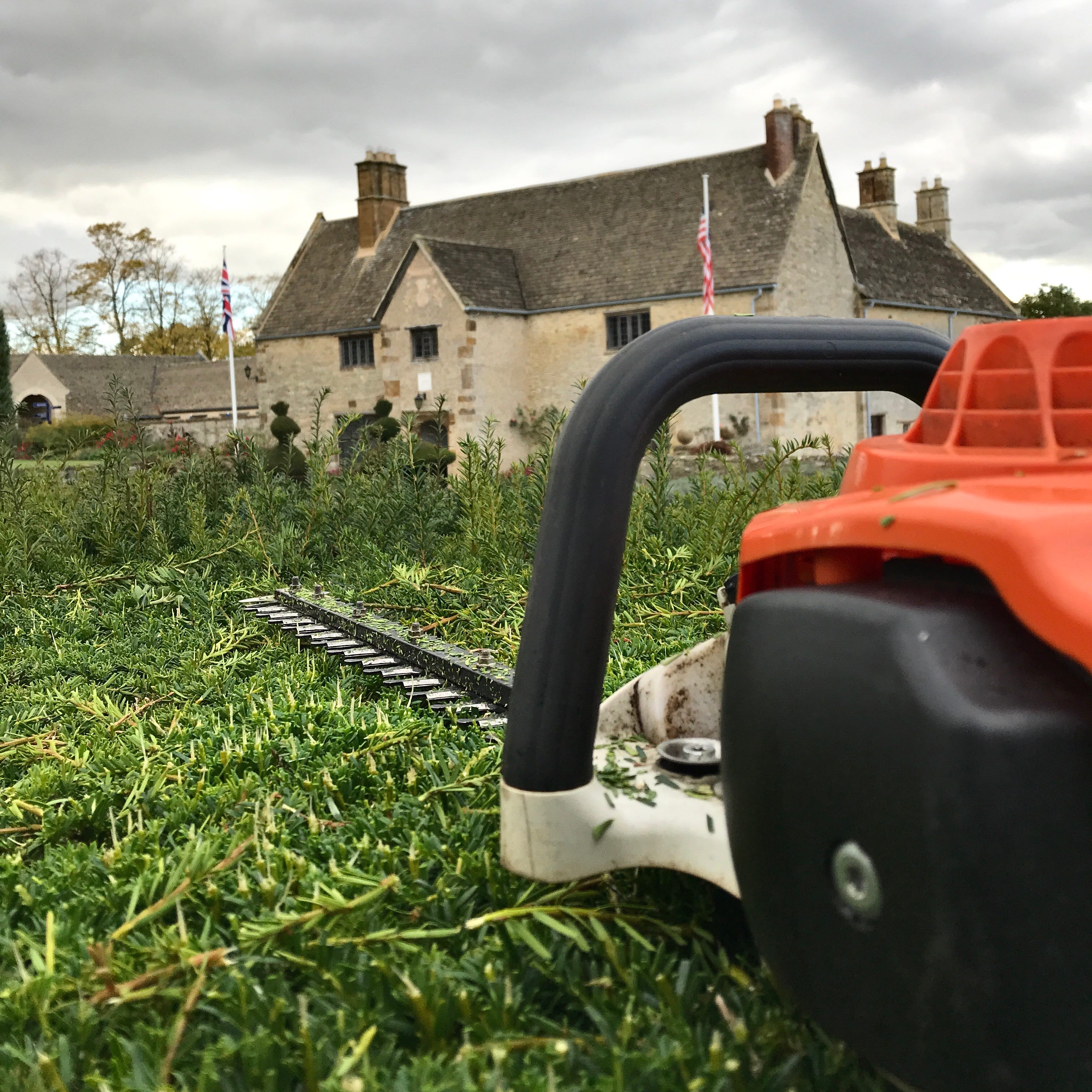
I begin again with my first image below captured autumn 2020 during a brief pause atop some ladders, whilst looking over at Sulgrave Manor itself. The greenery was but a tiny section of a network of hedges that shape the garden, an Arts and Crafts masterpiece originally designed by Sir Reginald Blomfield. Already just a few years down the line my picture feels dated with the old-school petrol hedge trimmer sitting on the hedge, most gardeners now choosing to adopt more user-friendly battery powered machines which are lighter, quieter and fume free – at least for the end user. Luckily, after that initial cut, I was fortunately able to introduce the first battery powered trimmers to the venue.
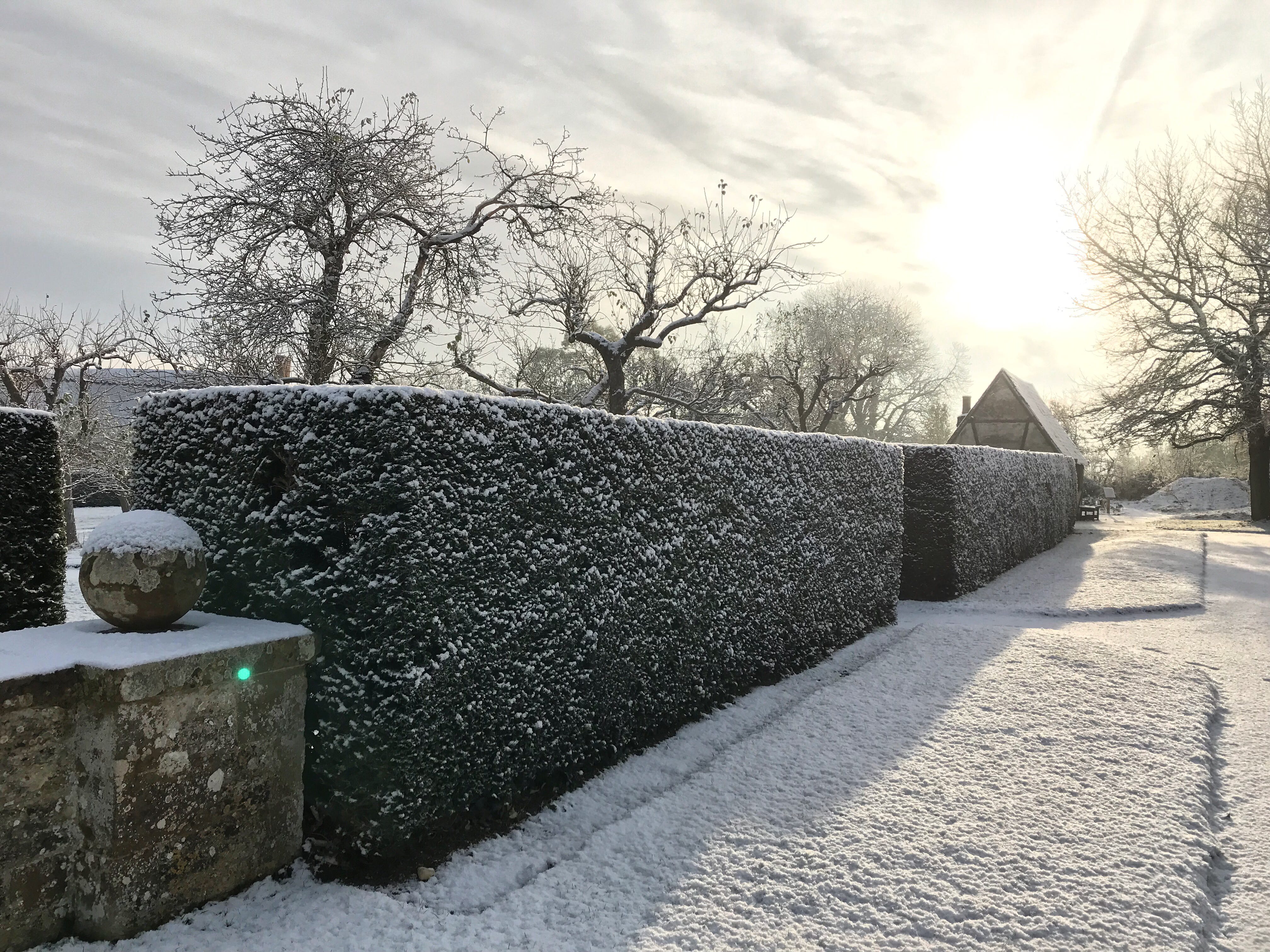
It became plain to me during my time in that garden that as an architect and garden designer, Blomfield cleverly understood how the hedge as a garden feature could work, being very careful on his plans to state the dimensions expected of the mature hedge – indicating to me a very considered and precise approach. Now, a century or so on from its conception, it is easy to see what Blomfield was trying to achieve: hedges that would conceal ground level changes, create characterful, calming atmospheric garden spaces with a range of microclimates, and stand tall as features in their own right. I can’t begin to describe how impressed and inspired I felt as day by day, season by season I discovered how important and integral those hedges were to the overall success of the garden.
In my time there I managed two full cuts of the yew hedges, both times allowing opportunity to modify key sections in order to bring them closer to the design intention. The work shown above was my first on that particular hedge and I was glad, after watching the hedge’s softness increase over many weeks, to finally have the opportunity not just to start trimming, but to begin to understand how the hedge wanted to grow. Obviously, whilst it acted as such, the hedge wasn’t one singular feature but lines of carefully placed individual plants, each one bringing its own strengths and weaknesses to the fore.
Before I continue, it would be remiss of me not to add that whilst most of the hedge trimming was stubbornly controlled by myself, in one way or another I was supported by a fabulous assistant and a team of intrepid volunteers, thankfully. Nevertheless, my arms still remember the fatigue from long days wielding the trimmer, and I can still taste the oil filled fumes and sense the vibration of that trimmer in my gloved hands.
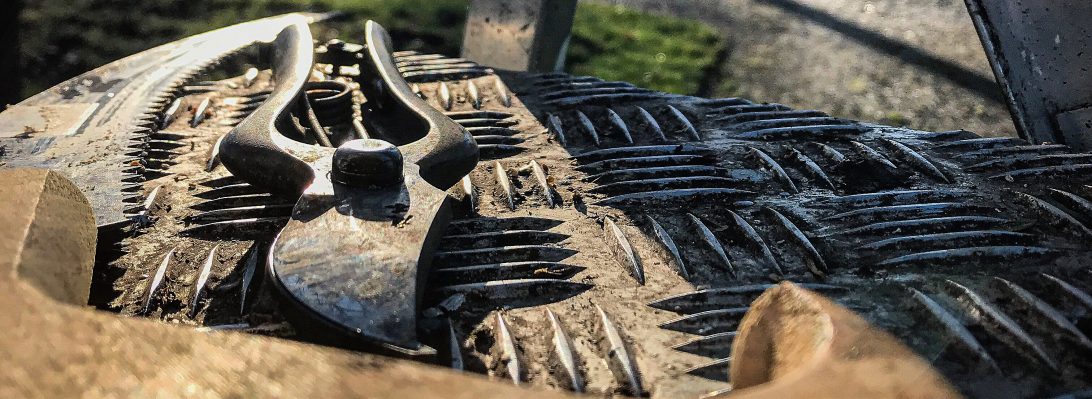
In preparation for that first cut, I remember myself sharpening, and sharpening and sharpening the trimmer teeth, which without a power tool was a lengthy if important process. Indeed yew hedges, as that first raw image painfully reminds, can be left tufty if the blades aren’t running sharp and tight. Whilst busy with that narrow metal file scraping away at countless teeth on the blades, I also remember becoming lost in the moment as often I am, where I began wondering about the value and contribution of hedges in general, which brought me originally to the article.
What struck me about the formal garden hedge, as one blunted blade edge after another was restored to its razor sharp silvery self, is that whilst they’re often the most dominant feature to set the garden scene, hedges can in their own green-screen way be overlooked – quite literally sometimes! Hedges can be massively important to a garden however, not just as barriers but in rooting many garden designs in place, and if you’ll pardon the pun they should be, as long standing features, very carefully considered elements of any formal garden – just imagine Hidcote, or Sissinghurst, or Sulgrave Manor for that matter, without their hedges.
Pausing for a moment my focus on hedges as key garden features, I do feel it’s important to acknowledge a few other elements in order to put hedges in their place. A neatly mown lawn for example, allows eyes to wander, smoothly carrying them to other features such as a statue here or bench over there. A lawn can provide room to spread out and play, whilst also giving us space to think, letting our eyes and minds wander free. We mustn’t forget that the lawn is also a living and breathing thing in itself, practically and artistically intended, just as the hedge, and supportive of other flora and fauna too.
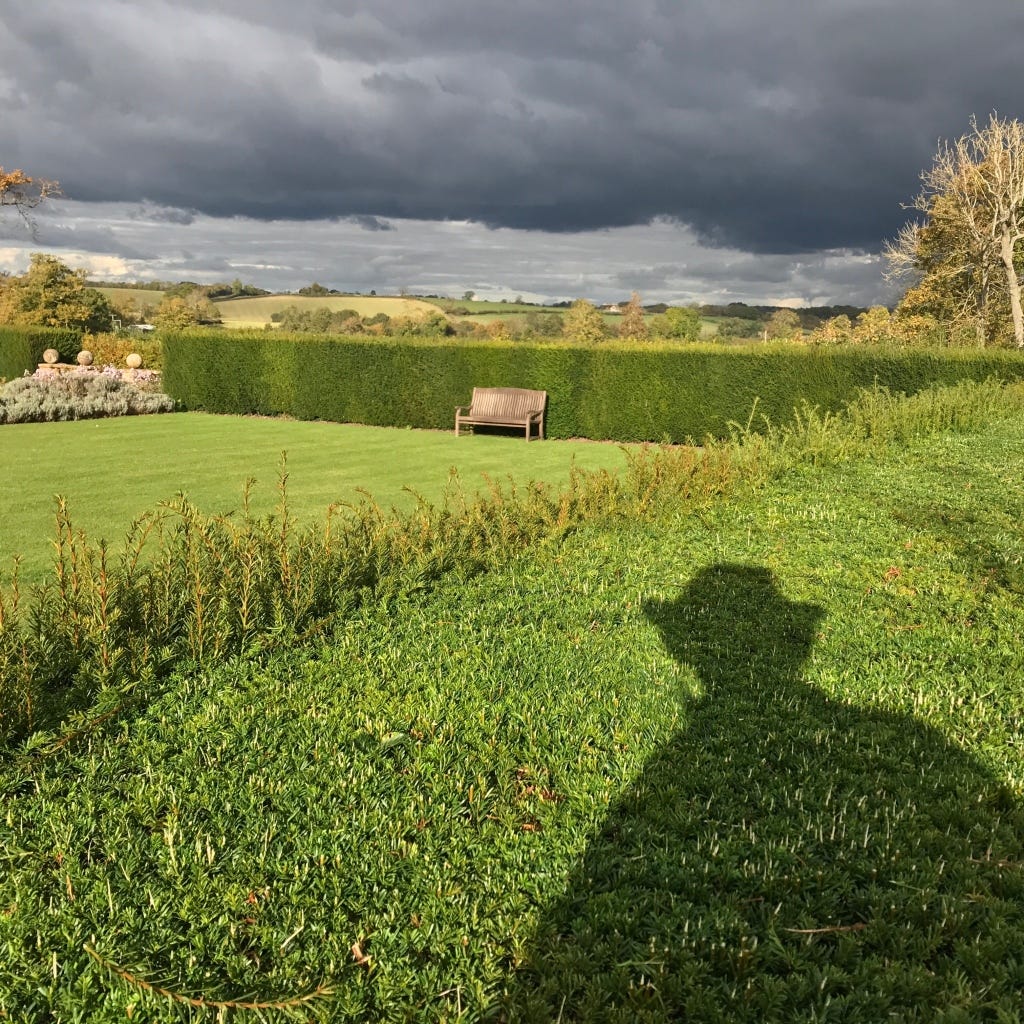
Planted borders also weigh-in heavy as contenders for the top spot on any garden wish list. Indeed, for many folks, a garden just can’t be a garden without at least one themed and artfully planted border where, from the cutest alpine offerings to perennial powerhouses or sensational shrubberies, the gardener’s plant selection list appears endless. Borders can fill our gardens with texture, colour, depth and movement, and throughout the seasons can bring scent and personality.
I could very easily go on with my garden elements list: trees for anchoring a garden and drawing eyes upwards with their seasonally clad stems; structures, be they lichen peppered walls, aged fences or pergolas; and paving with their leading lines and textures. There are many more points I could mention, but for now I must return to the hedge, for without this, many of those other elements would be left exposed and meaningless.
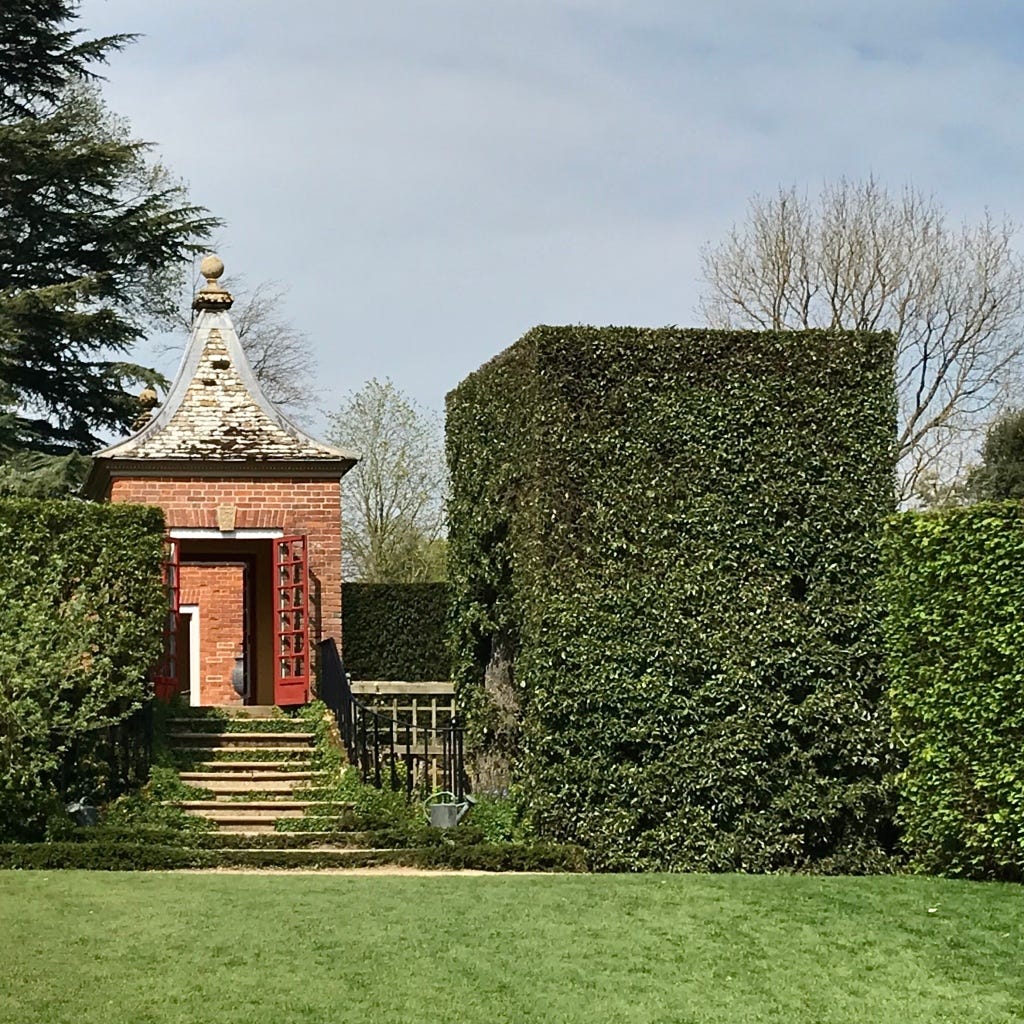
Now, I know that for many a hedge is simply a living fence, a barrier or partition if you will, useful to create privacy or perform some other function. ‘A row of closely planted shrubs or low-growing trees forming a fence or boundary’, my dictionary to hand states. So hedges can and do in many situations have a mundane and practical life. Yet where there’s room, and when they’re considered and included within a garden they can become something altogether different, not just blurring the edges like living green screens but special elements in themselves, integral to the visual enjoyment of a garden and a garden’s success.
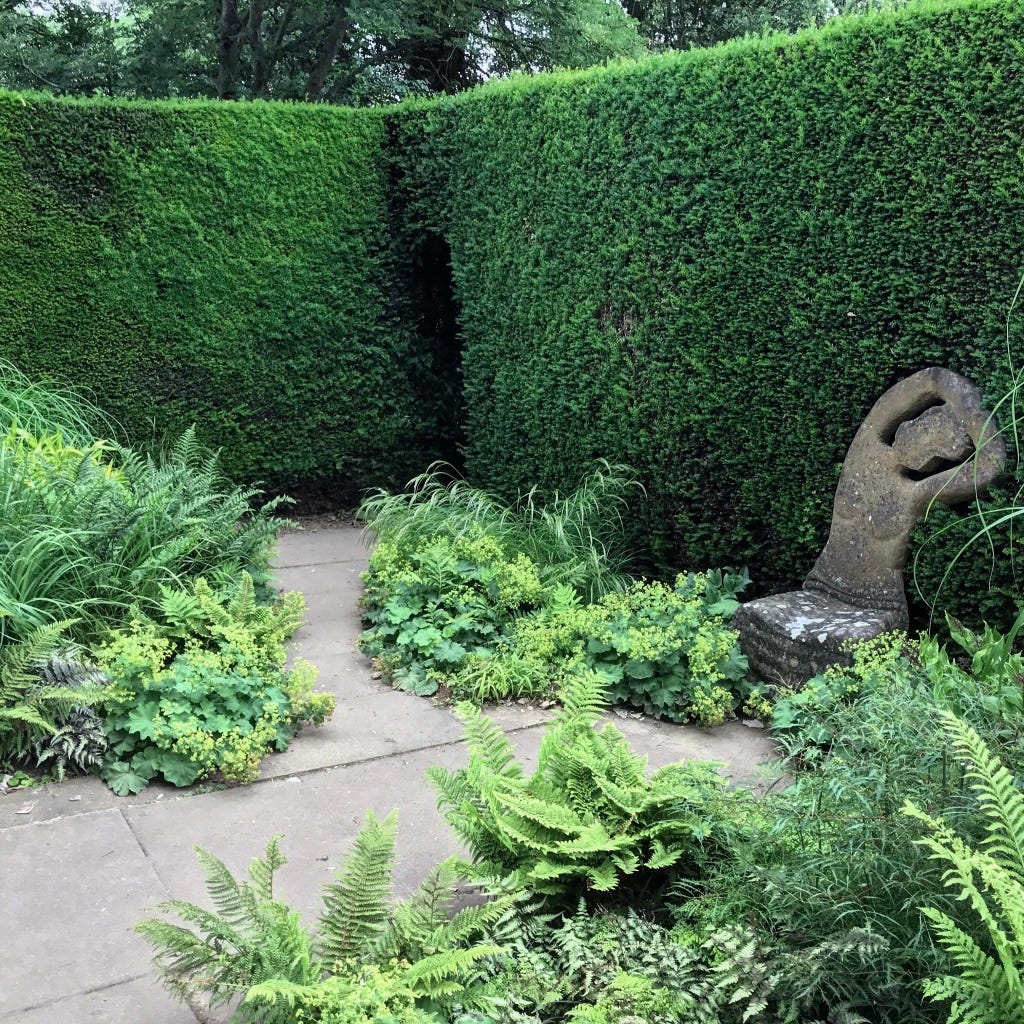
You may be familiar with the concept of rooms within a garden, not in terms of built structures but in spatial terms, where areas within a larger garden can be divided into separate character areas with hedges, walls and fences used to divide each space. Where hedges are chosen to create such spaces, very special atmospheres can be produced, the hedge’s open nature filtering weather in a way that walls and fences never can. Similar levels of privacy and protection are offered from the world outside by using hedges, but somehow with a wholesome softness that couldn’t otherwise be achieved with a wall or fence unless clad in plants.
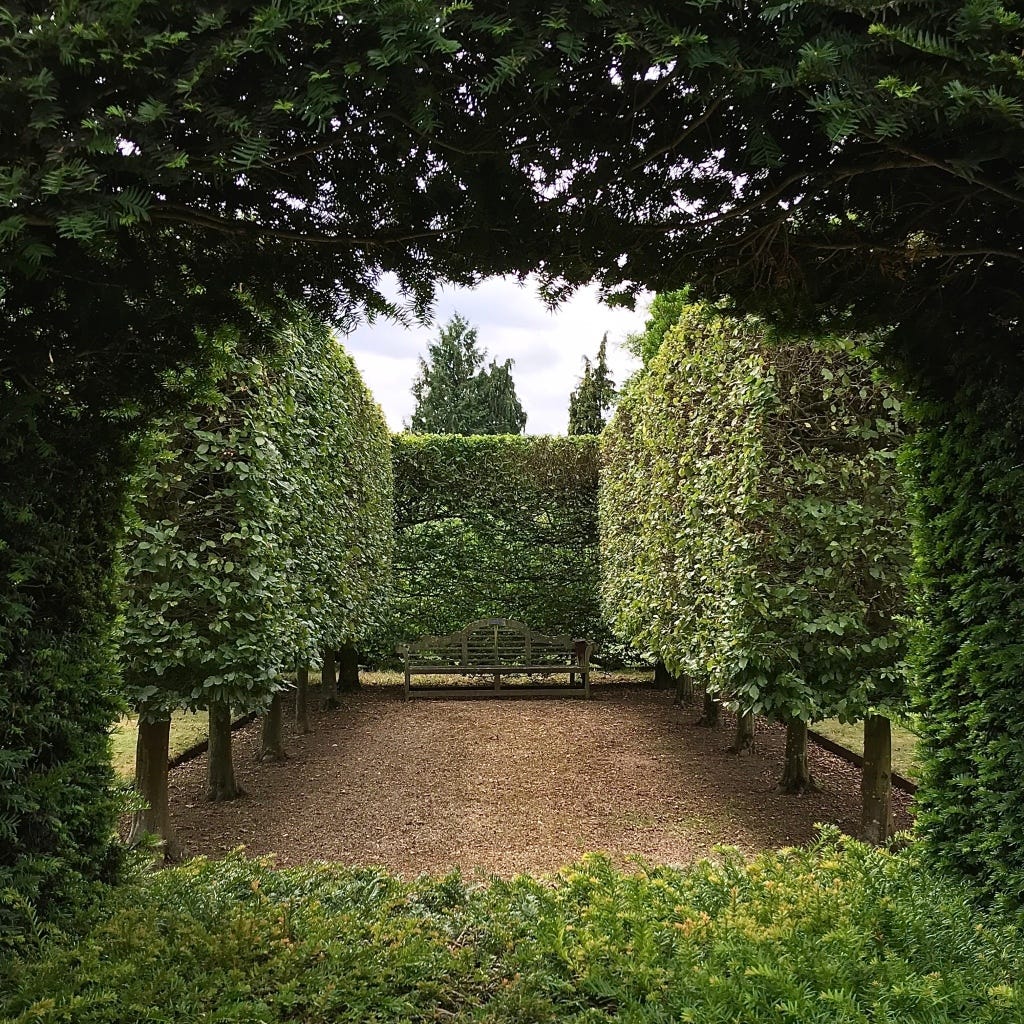
Before bringing my article to a close, I must say that when looking at formal hedges many things still come to mind. Hedges can be links to a romanticised past, relics of a now misunderstood place, or time travelling features that continue to hold a garden to account. In hedges I see structures that can carry us from one place to another, or as cloaks that can conceal unwanted features one moment, and reveal outstanding views the next. Hedges can also provide structure and shelter, as I hope to have proven above, which on a basic level can make a garden space bearable and workable during inclement weather, whilst at other times acting as an exquisite feature in itself, often lifting a garden to new heights.
Let’s forget now the league of winning garden features, for they’re all important in their own ways and for different reasons. But let us not forget the garden hedge, for each structure brings character to the garden, and so much more besides. Yes, they can feel like a bind when every year, sometimes twice, their neatness fades and they call for a trim or a shear, and yes, the work can be challenge for sure. Hedges can though, I hope to have shown, bring interest and intrigue to the humblest of gardens, and also food and shelter for little creatures.
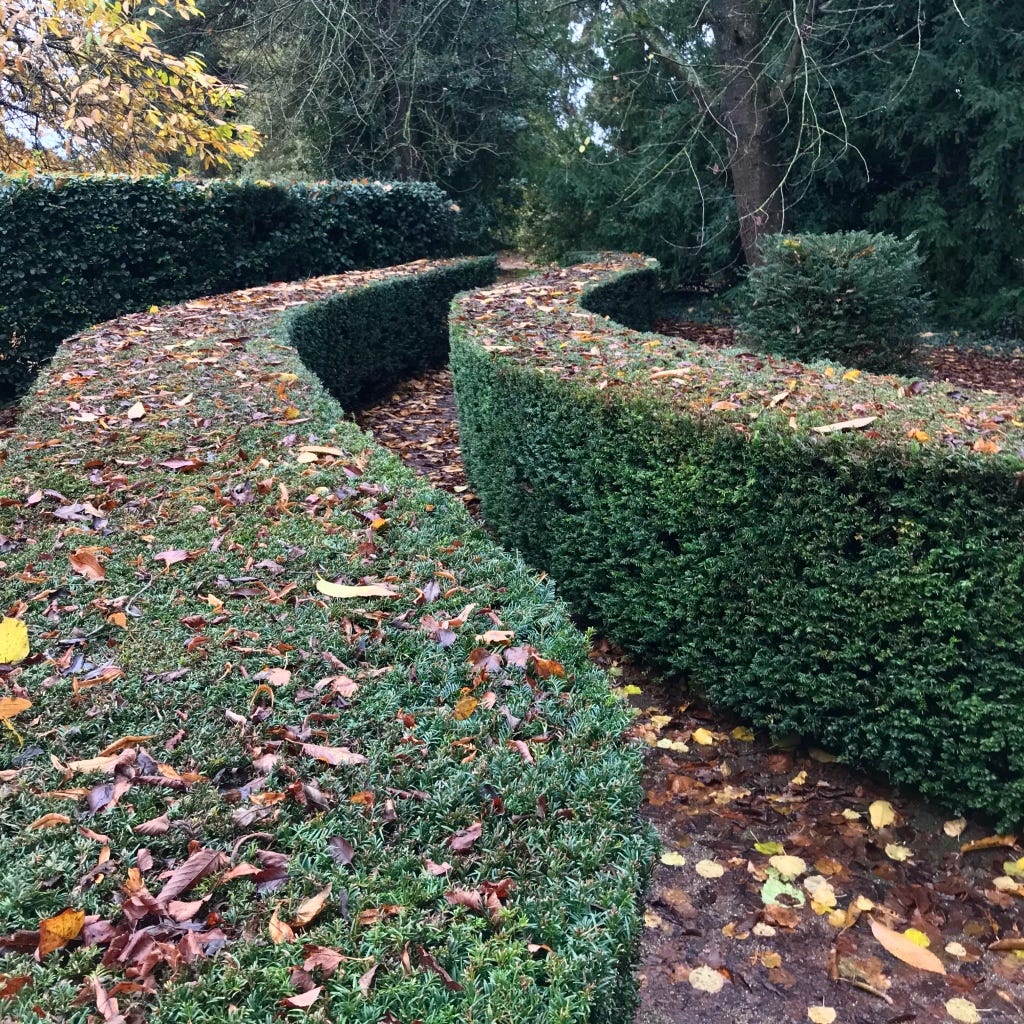
So here’s to the designers, who carefully select and design them, to every steady handed, arm-aching gardener who ever tended one, and to all others who in some way laced a garden or two with a trim and proper hedge: I praise and salute you. May your trimmers be sharp and smoke free, may your levels run true, and your shoots grow unblemished and steadily through each year – long live the formal garden hedge, and their gardeners too!
Until next time… tune in to a formal hedge near you (and send me a picture do!) 🌿
 Gardening Ways